
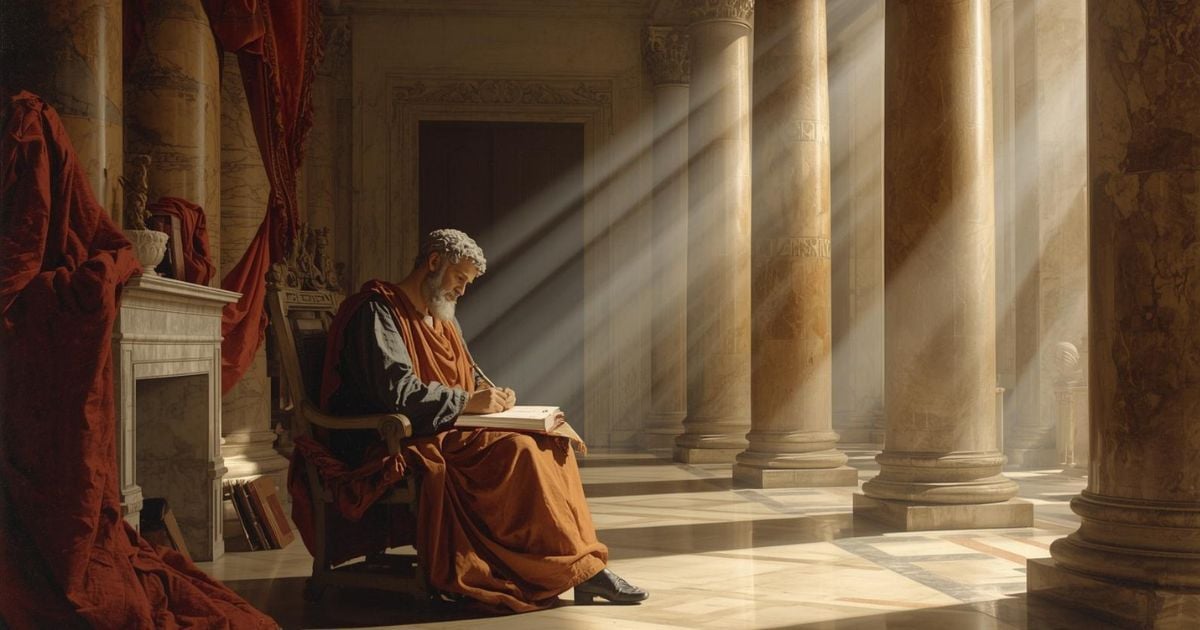
Philosophy is tested in behaviour, not in words. Letter 20 makes that demand plainly. Progress isn't measured in speeches given or arguments won, it's measured in stoutness of heart and decrease of desire. The man who lectures on wisdom while living in contradiction to it is performing, not practising. Seneca's standard is this: the highest proof of wisdom is that deed and word should be in accord, that a man should be equal to himself under all conditions, always the same.
He doesn't pretend this is easy or that the philosopher always keeps the same pace. But the philosopher should always travel the same path. The source of inconsistency is clear: most people never truly decide what they want, and even those who do abandon it and slide back. His definition of wisdom, stripped of all elaborate formulation, is this: always desiring the same things, and always refusing the same things. Then the practical turn.
If you step back from public life and the crowds that come with it, who remains? Poverty will keep your real friends and strip away everyone who was there for what you could give them. The letter closes with Epicurus: your words will be more imposing if you sleep on a cot and wear rags, because then you won't be merely saying them, you'll be demonstrating their truth. Demetrius the philosopher owned nothing, not even a cloak to lie on.
He was not a teacher of the truth. He was a witness to it.
Seneca identified something that social media has made epidemic: the gap between our curated wisdom and our actual lives. In ancient Rome, philosophers faced the same temptation we do—to sound wise without doing the work. Today, we're all potential philosophers, sharing insights and life lessons across platforms while our real lives tell different stories. The warehouse worker who posts about financial discipline while drowning in debt. The parent who shares articles about screen time while scrolling through dinner. The friend who preaches self-care while working themselves to exhaustion. This isn't just hypocrisy—it's a fundamental misunderstanding of how wisdom works. Real wisdom isn't information you can download and redistribute. It's patterns you've lived through, mistakes you've made, and principles you've tested under pressure. When we skip the living part and jump straight to teaching, we create what Seneca called an 'unstable mind'—one that hasn't committed to clear values. The solution isn't to stop sharing what we've learned, but to close the gap between what we know and how we live. Seneca's practice of voluntary poverty offers a model: deliberately experience what you fear so you can speak from strength, not theory. When your advice comes from your scars, not your books, people listen differently.
Explore this chapter with AI to uncover deeper meaning and practical takeaways.
AI Discussion