
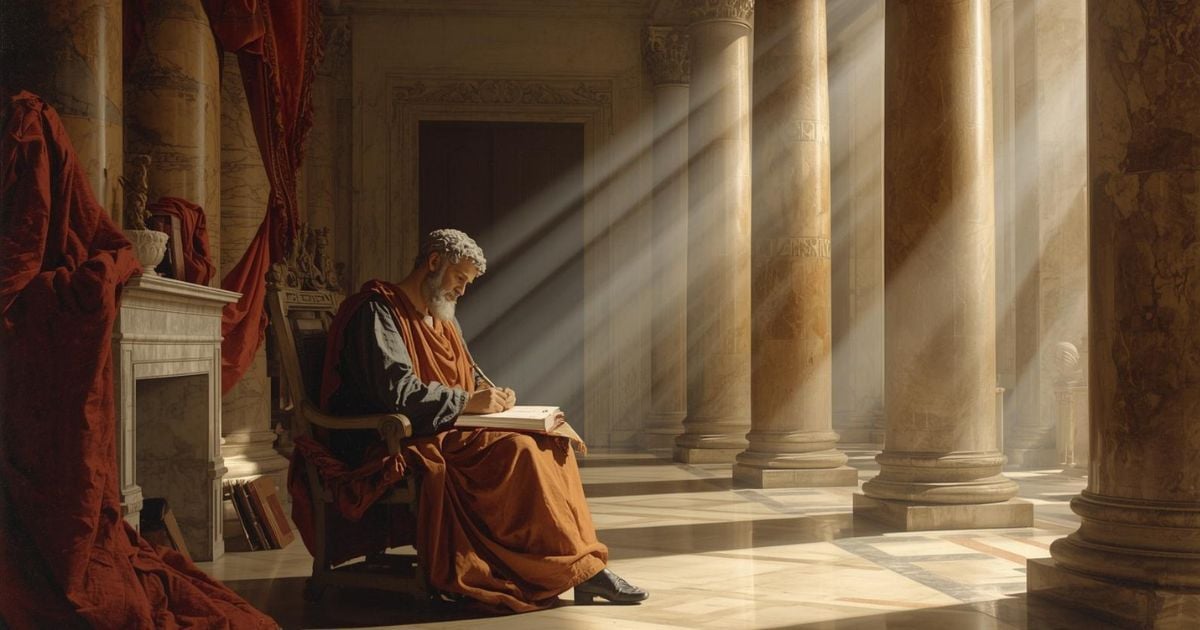
He has fled the city for his country villa, not to escape it, but to escape a fever that was working its way in. Letter 104 opens with that domestic detail and the image of his wife Paulina's worry, which has made him more careful of his own life than he would otherwise be. The letter then makes its real move: all this running away from external troubles is futile unless you have first done the harder work of running away from yourself.
What ails most people is not their city or their circumstances but their own vices, which travel with them everywhere. You cannot escape by going to the sea or to the mountains if you bring anger, fear, and greed in your luggage. His catalogue of Stoic heroes, Cato, Laelius, Tubero, is not nostalgia.
These men had a quality Seneca wants to identify and pass on: they did not merely resist Fortune's blows, they anticipated them. And first among the preparations for a free life is rejecting pleasures that make demands, and then rejecting wealth, which is, he says without softening it, the diploma of slavery.
Liberty cannot be gained for nothing. If you set a high value on liberty, you must set a low value on everything else.
Seneca understood something we still struggle with today: the seductive myth of the geographic cure. Whether it's ancient Romans fleeing to country villas or modern Americans chasing fresh starts in new cities, the pattern remains identical. We believe that changing our external circumstances will automatically change our internal experience. This myth persists because it contains just enough truth to be dangerous. New environments do provide temporary relief—the excitement of possibility, the break from familiar triggers, the hope that 'this time will be different.' But within months, the same relationship patterns emerge, the same workplace conflicts arise, the same financial pressures resurface. The problem isn't that external changes never help—sometimes they absolutely do. A truly toxic workplace should be left. An abusive relationship must be ended. The problem is when we use external change as a substitute for internal development. Seneca's examples of Socrates and Cato weren't men who never faced hardship—they faced extraordinary challenges. But they had developed internal resources that travelled with them: emotional regulation, clear values, the ability to find meaning in difficult circumstances. For working-class Americans today, this wisdom is particularly crucial. We often have fewer resources for multiple fresh starts, fewer safety nets for experimental life changes. Learning to distinguish between problems we can escape and problems we carry with us isn't just philosophical—it's practical survival wisdom that can save years of expensive wandering.
Explore this chapter with AI to uncover deeper meaning and practical takeaways.
AI Discussion