
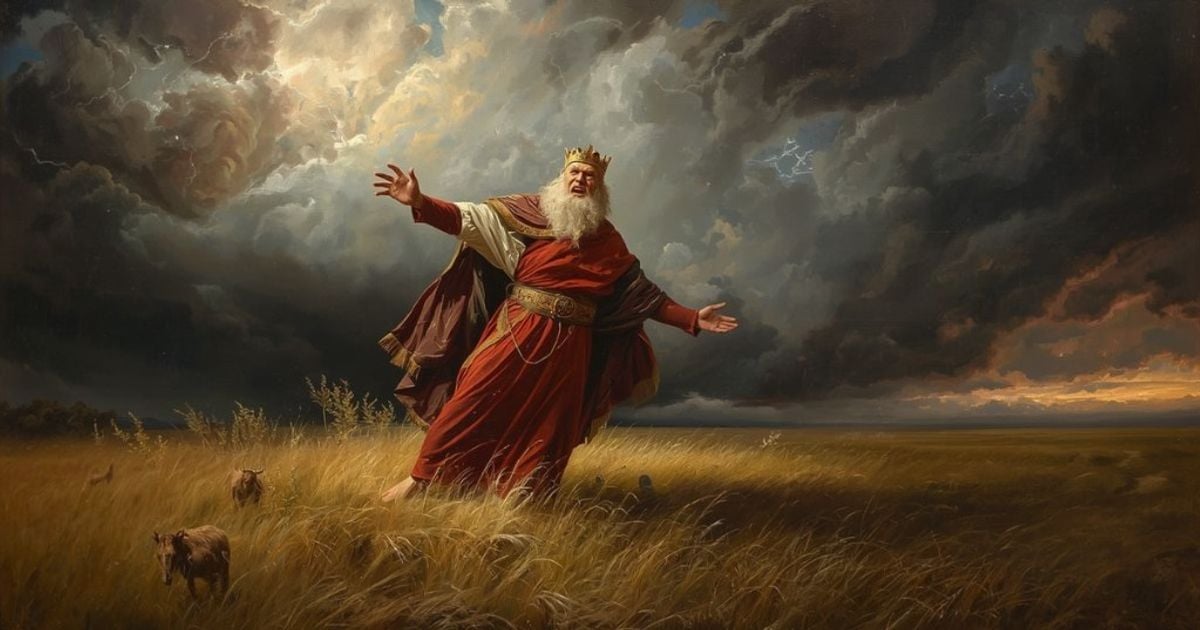
This is the scene that tests audiences most. Shakespeare stages the blinding of Gloucester in full view: nothing happens offstage.
Cornwall sends Edmund away with Goneril before it begins. The revenges about to be taken on his "traitorous father," he tells him, are "not fit for your beholding." Edmund exits. He will not see what his betrayal has made possible.
Gloucester is brought in and bound to a chair. Regan plucks his beard. He protests that they are his guests: "Do me no foul play, friends." Cornwall asks about the letter from France and the King's whereabouts. Gloucester admits he sent Lear to Dover. When pressed for the reason, he does not flinch: "Because I would not see thy cruel nails / Pluck out his poor old eyes; nor thy fierce sister / In his anointed flesh stick boarish fangs."
Cornwall's response to this is immediate: "See't shalt thou never." He gouges out one of Gloucester's eyes.
A servant, Cornwall's own, a man who has served him since childhood, steps forward and says: "Hold your hand, my lord." He draws his sword. They fight. Cornwall is wounded. Regan grabs a sword, comes behind the servant, and kills him. Then Cornwall takes the second eye: "Lest it see more, prevent it. Out, vile jelly!"
In agony, Gloucester calls for Edmund. Regan tells him: it was Edmund who reported his treasons. Edmund is the one who betrayed him. He is "too good to pity thee."
What happens next is the scene's true turning point. Gloucester, blind, says: "O my follies! Then Edgar was abus'd. Kind gods, forgive me that, and prosper him!" Sight is the wrong word for what he has just achieved.
Regan orders him thrown out to "smell his way to Dover." Cornwall is bleeding and leaves. Two servants are left alone onstage. One says: "I'll never care what wickedness I do, if this man come to good." The other: "If she live long, / And in the end meet the old course of death, / Women will all turn monsters." They go to find flax and egg whites for Gloucester's face.
It is the most decent thing anyone has done in several scenes.
Shakespeare understood something brutal about human psychology: we often destroy the people trying to save us. Gloucester banishes Edgar, the son who actually loves him, while embracing Edmund, who's plotting his destruction. This pattern repeats endlessly in modern workplaces, families, and communities. The whistleblower gets fired while the corrupt manager gets promoted. The friend who warns you about your partner's cheating gets cut off while you stay with the cheater. The family member who points out addiction gets excluded from gatherings while everyone enables the addict. We do this because truth-tellers force us to confront uncomfortable realities that threaten our sense of control or self-image. It's psychologically easier to attack the messenger than face the message. But Shakespeare shows us the cost: Gloucester's willful blindness leads to literal blindness and the destruction of everything he values. The servant who tries to stop the torture dies, but his courage matters because it shows that someone still chose right over safe. In our own lives, we need to ask ourselves: who are we pushing away because their truth makes us uncomfortable? And when we see injustice happening, do we have the courage to speak up even when it's dangerous? Sometimes being a truth-teller means accepting that people will hate you for caring about them.
Explore this chapter with AI to uncover deeper meaning and practical takeaways.
AI Discussion