
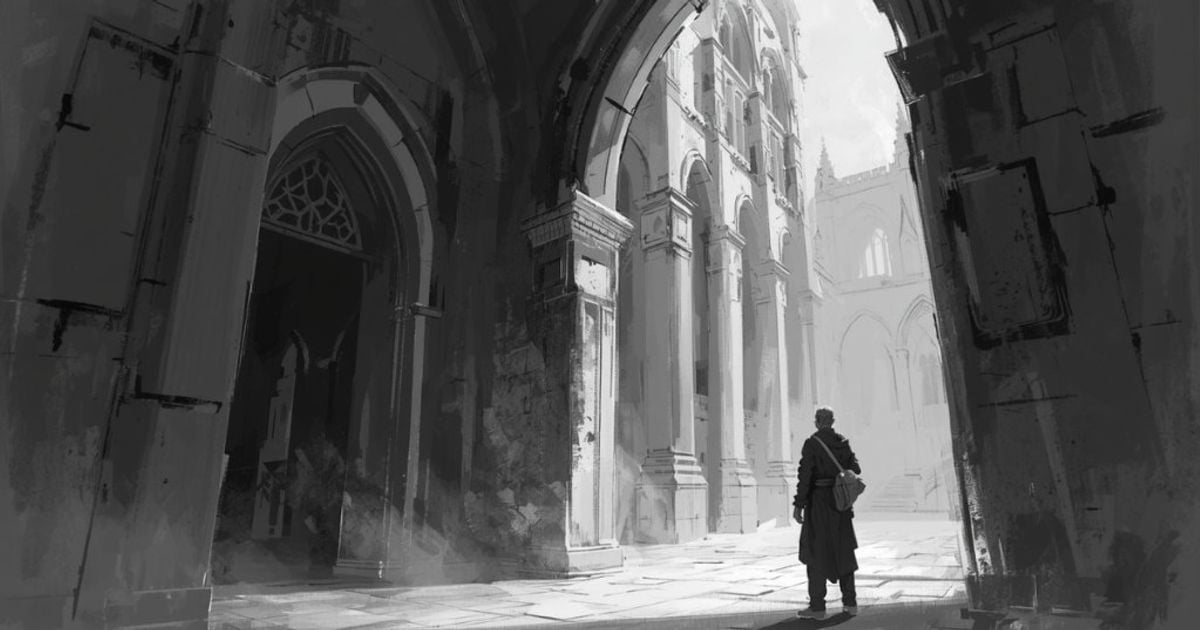
Jude comes off the platform tottering, water running out of him. Arabella says he has done for himself. He meant to. A man with two wishes, to see a particular woman and then to die, could manage both by walking in the rain. He has seen Sue for the last time. Along the silent colleges he stops at archways where nobody is. Addison, Gibbon, Johnson. Rubric, Sarcophagus, Cardinal with its windows like lifted eyebrows. She wants a drink. He feels the fog from Cardinal meadows as death-claws. When I am dead, he says, you will see my spirit flitting up and down here.
That same rain at Marygreen. Mrs. Edlin finds Sue scrubbing stairs to discipline herself. Jude has been here. She still loves him, grossly. She will not see him again, but she will make her conscience right by the ultimate penance. Phillotson agrees to her living as she chooses. That, she says, is an indulgence she ought not to exact. Mrs. Edlin tells her not to force her nature. It is my duty. I will drink my cup to the dregs. She begs the widow to stay the night.
She kneels in her old room, then unlatches his door. I beg to be admitted. She has kissed Jude a good many times. She does not tell that she called him her darling Love. She swears on a brown Testament never to see him again. He warns her a third time. A half-marriage should be completed, with a lover hanging about. She starts back when he puts his arm round her. You shrink from me again? It is my duty. He lifts her through the doorway. A look of aversion passes; she clenches her teeth and utters no cry. On the landing Mrs. Edlin says weddings be funerals nowadays.
Hardy shows us something devastating about human psychology: sometimes we choose suffering not because it helps anyone, but because it feels like proof of our moral seriousness. Sue forces herself into sexual submission she finds repulsive, convinced this self-violation somehow balances her emotional betrayal. Jude walks to his death, believing his suffering demonstrates he understands the gravity of his choices. But neither action repairs the harm they've caused—both create more damage. This pattern persists today in countless forms. The parent who made a parenting mistake stays in an unhappy marriage 'for the kids,' believing their misery protects their children. The employee who cost the company money turns down promotions for years, convinced they don't deserve advancement. The friend who betrayed a confidence isolates themselves completely, thinking their loneliness proves their remorse. But self-punishment often hurts innocent people too—Sue's revulsion harms Phillotson, the parent's misery affects the children they're trying to protect. Real repair requires facing the people we've hurt, changing our behaviour, and rebuilding trust through consistent action. It means becoming someone capable of better choices, not destroying our capacity for future good. When guilt becomes performance, everyone loses.
Explore this chapter with AI to uncover deeper meaning and practical takeaways.
AI Discussion