
Jude wins a Sunday fight with himself and goes to Marygreen instead of Lumsdon. His aunt is dying, the bakery sold. When he mentions Sue she sits up in bed: don't be a fool about her. The girl was raised to hate the Fawleys, will scorn a working chap, and civility from her is not a licence. A neighbour adds childhood pictures: Sue reciting The Raven in a pink sash, then steering the pond slide with twenty boys and running indoors when they cheered.
On the green, men who knew him as a boy ask if the City of Light was all he expected. He defends the silence as the sleep of a spinning-top, then admits he is almost as far from a college as ever. One slaps the old answer: such places are not for such as you. The remark turns him from the imaginative world to a cold northern light. Hovering outside the walls will not do.
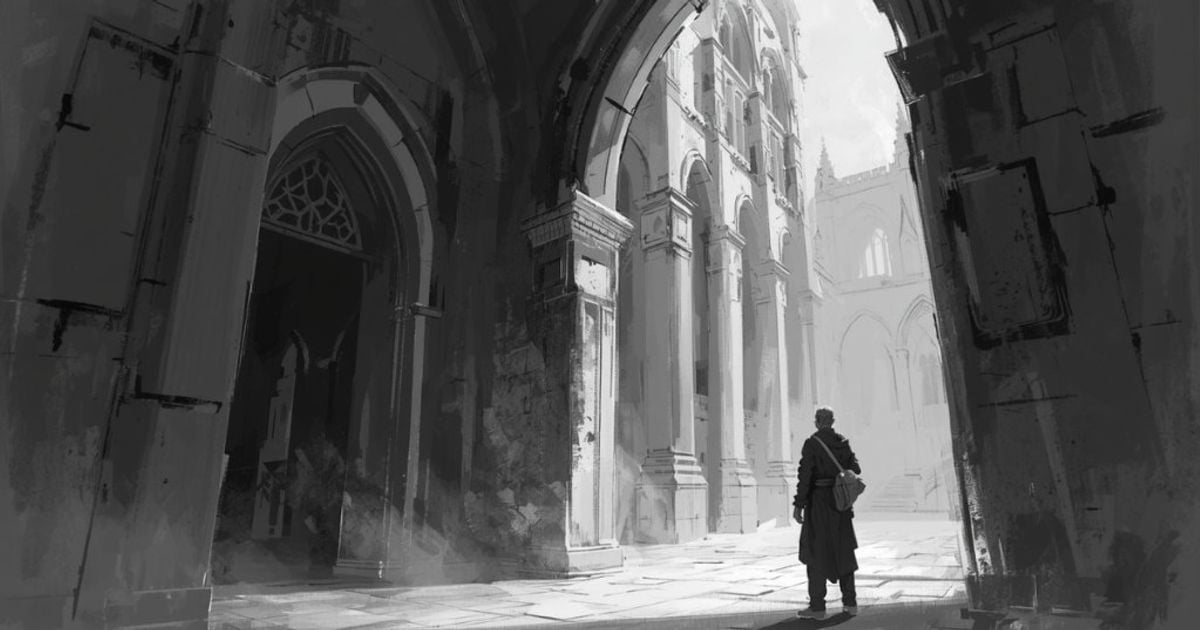
He writes five heads of houses whose faces looked far-seeing, then wishes the letters unsent. Phillotson is taking a larger school further south, a move that looks like provision for two. No reply comes until an afternoon he will always remember. From a theatre lantern he sees that his destiny lies with the unrecognised toilers, not the halls. A letter from T. Tetuphenay of Biblioll tells Mr J. Fawley, Stone-mason, to remain in his own sphere. He already knew it. He drinks, walks Fourways as the real city, and chalks Job on the shut college gate: I have understanding as well as you.
Hardy understood something brutal about human psychology: we're most tortured by the things we can almost touch. Jude doesn't live in a rural village dreaming of distant cities—he lives in the shadow of the very colleges that reject him. He can hear the bells, see the spires, even work construction jobs on campus. This proximity makes his exclusion feel personal rather than systemic. Modern America operates on the same principle. We place community colleges next to universities, retail workers alongside managers, CNAs beside doctors. The message seems to be about opportunity and advancement, but the reality is often about maintaining hope while preserving hierarchy. The most dangerous dreams aren't the impossible ones—they're the ones that feel just within reach. A janitor at Google headquarters faces different psychological pressure than one who never sees tech workers. The healthcare aide who watches doctors make decisions feels different about her capabilities than one who works in isolation. Hardy shows us that sometimes the cruelest thing society can do isn't to crush dreams outright, but to keep them barely alive. The question isn't whether dreams matter, but whether we're honest about the actual costs and pathways. When we can see privilege up close, we owe ourselves the clarity to distinguish between what's inspiring and what's actually accessible.
Explore this chapter with AI to uncover deeper meaning and practical takeaways.
AI Discussion