
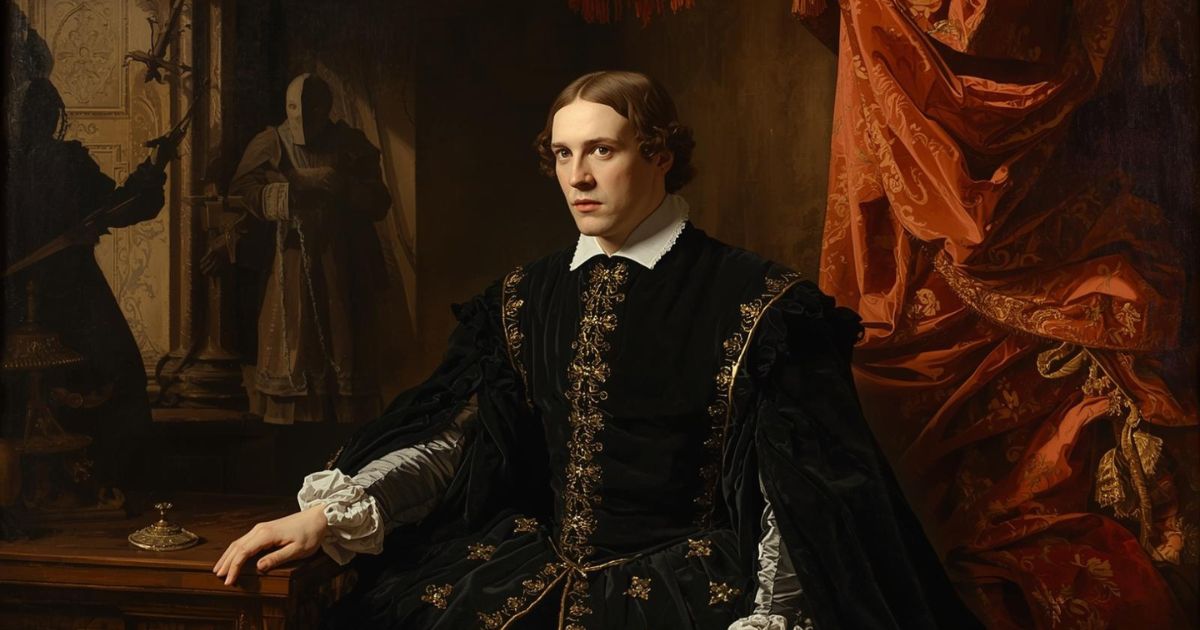
Claudius and Polonius lay a trap: Ophelia will walk where Hamlet often paces while the two men hide to hear what passes. First the king questions Rosencrantz and Guildenstern, who report Hamlet distracted but unwilling to explain why; the queen learns the players pleased him, which Claudius reads as another thread in the prince's strangeness.
Hamlet enters alone and delivers the to be or not to be speech, weighing life's bruises against the dread of what may follow death, and concluding that fear of the unknown keeps people suffering rather than acting. Ophelia tries to return his gifts and speak plainly; Hamlet senses the setup, denies he ever loved her, tells her to get thee to a nunnery, and attacks the world's corruption before storming away.
Ophelia is left believing she has seen true madness. Claudius is not persuaded it is mere love sickness; he fears Hamlet's wit, the people's love for him, and the threat he poses to the throne, and resolves to send him to England. Polonius still wants one more hidden test with Gertrude after the play. Philosophical paralysis and wrecked intimacy meet in one corridor while rulers choose exile over a truth they cannot control.
The corridor trap has done its work: Ophelia is broken, Claudius is frightened, and Hamlet's philosophy has become a weapon aimed at the people who tried to use her.
Shakespeare understood something we're still learning: the act of surveillance changes both the watcher and the watched. In Hamlet's time, courtiers lived under constant observation, never knowing who was reporting to whom. Today's workplace surveillance technology would seem magical to them, but the psychological damage remains identical. When Hamlet realises he's being watched, monitored, and discussed, his behaviour shifts. He becomes suspicious, defensive, and ultimately cruel to people who might be innocent. This isn't weakness - it's human nature. Studies show that people behave differently when they know they're being observed, often becoming exactly what the watchers feared. The tragedy isn't that Hamlet gets angry; it's that the surveillance system creates its own justification. His uncle Craig can now point to Hamlet's outburst as proof he was right to be suspicious. This creates a perfect closed loop: suspicion generates the behaviour that justifies more suspicion. We see this pattern everywhere - in schools with metal detectors that make students feel criminalized, in workplaces where productivity monitoring breeds resentment, in relationships where phone-checking creates the secrecy it claims to prevent. The question isn't whether Hamlet should feel watched - he should, because he is. The question is whether he can break the cycle before it breaks him.
Explore this chapter with AI to uncover deeper meaning and practical takeaways.
AI Discussion