
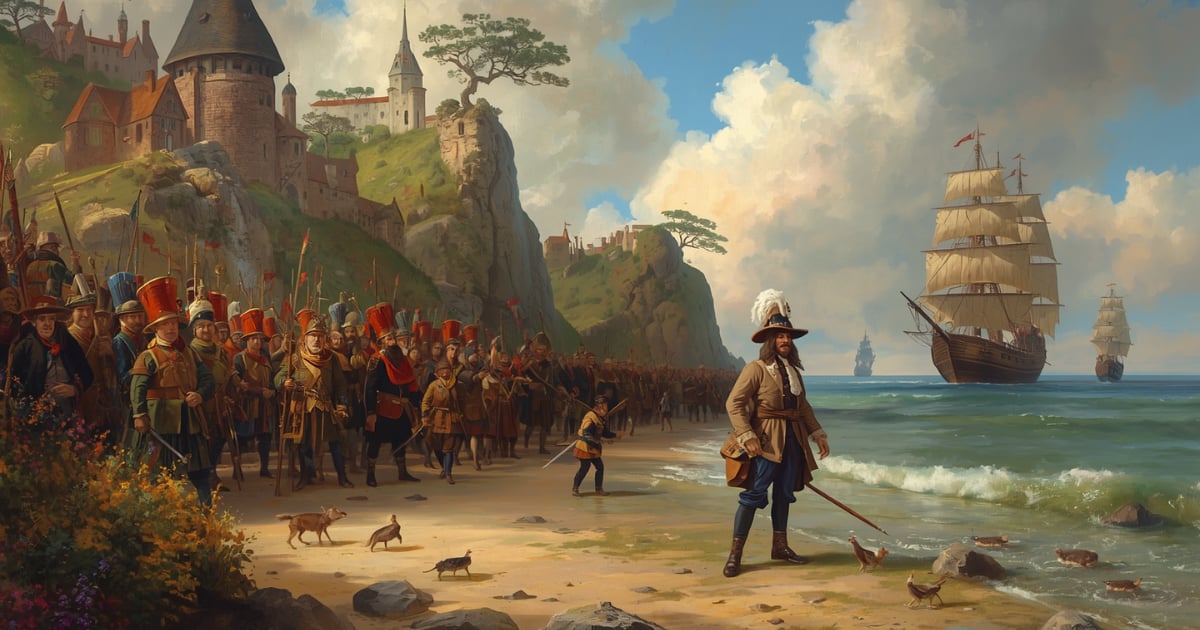
Gulliver settles a modest economy to his own content: clay room, hemp bedding, rabbit and nnuhnoh skins, Yahoo, soled shoes, honey and health, and none of the lawyers, politicians, pickpockets, or dungeon life he lists by the score. He listens to Houyhnhnm talk on friendship, reason, and poetry, grows ashamed of his reflection, and imitates their gait until friends say he trots like a horse. Then his master summons him early.
After the Yahoo debate, the assembly resented a Yahoo kept more like a Houyhnhnm than a brute; neighbours pressed for execution of the exhortation to employ Gulliver like the rest of his species or command him to swim home, fearing his reason plus Yahoo pravity might seduce wild herds to ruin cattle. Gulliver swoons at his feet, then accepts two months to build a vessel with the sorrel nag's help. They sight a distant island, cut oak wattles, stitch a large canoe from Yahoo skins, caulk it with Yahoo tallow, and draw it to the sea.
On departure day Gulliver weeps, waits for tide and wind, kisses his master's raised hoof, pays respects to the company, and pushes off from shore. When he reaches the coast at last, the relief of rescue carries the cost of everything he can no longer unsee about his own kind.
Swift understood something brutal about human nature: communities often punish the very growth they claim to encourage. The Houyhnhnms genuinely care for Gulliver, but his transformation from ignorant Yahoo to reasoning being threatens their entire worldview. If one Yahoo can think, maybe their whole hierarchy crumbles. This isn't malice, it's self, preservation. The same dynamic plays out in modern working, class communities. The family that mocks your college dreams because education makes you 'think you're better than us.' The workplace that labels safety advocates as troublemakers. The friend group that freezes out the person who gets sober. The church that silences members asking hard questions about social justice. Growth often means outgrowing your place, and communities will choose stability over your development every time. The tragedy isn't that they're evil, it's that they're human. They built their identity around certain assumptions, and your transformation forces them to question everything. But here's what Swift also shows us: the community that can't evolve to include your growth isn't worthy of your diminished self. The horses' paradise becomes a prison the moment it demands Gulliver stop becoming who he's meant to be. Sometimes the most loving thing a community can do is let you go. Sometimes the most courageous thing you can do is leave before they make you small again.
Explore this chapter with AI to uncover deeper meaning and practical takeaways.
AI Discussion