
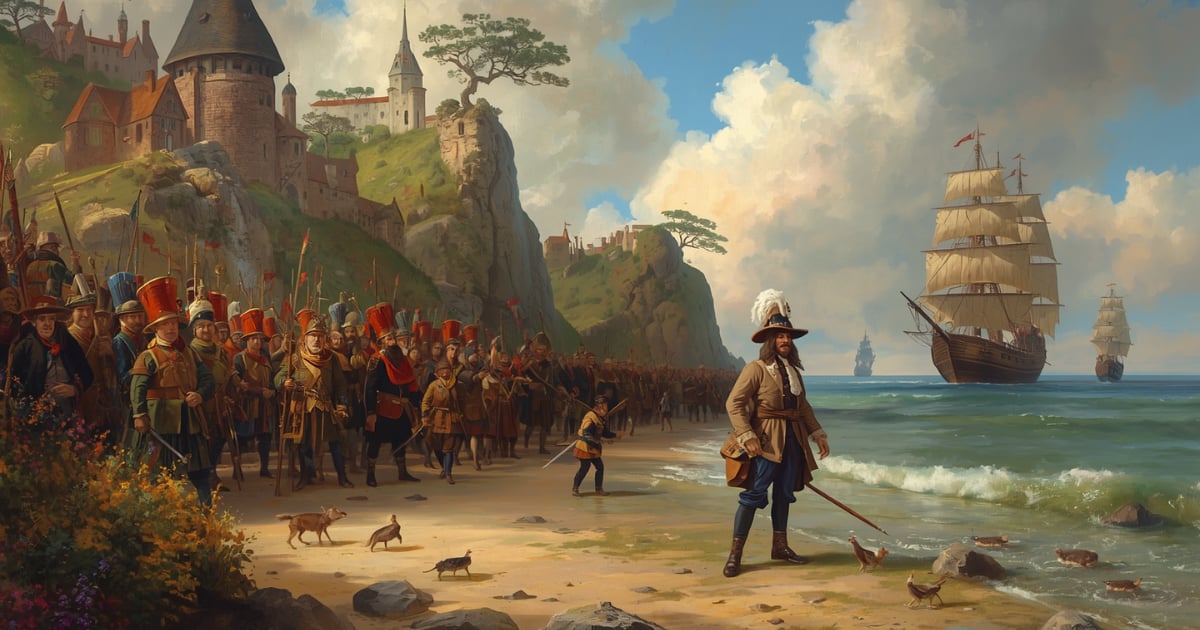
Gulliver asks leave to walk among the neighbourhood Yahoos, sure his hatred will keep him uncorrupted. His master sends a sorrel nag as guard. When Gulliver strips his arms, the herds treat him as kin and still hate him, like a tame jackdaw among wild ones. He seizes a three-year-old male to soothe it; the cub squalls, bites, and voids yellow filth over his clothes. A brook wash and a long airing are the price of returning to the house.
On a hot day he bathes naked in a river. A young female Yahoo leaps in and embraces him. He roars; the nag gallops up; she quits the grasp and howls from the far bank while he dresses. The household takes it as diversion. Gulliver cannot deny he is a Yahoo in every limb, since their females took him for their own.
Then he turns to the horses who have no word for opinion. Reason, they say, strikes at once; controversy in a doubtful claim is unknown. Friendship runs to strangers as to neighbours. Marriages match colour and strength, not courtship. At youth festivals, servants drive Yahoos in with hay and milk, then drive them out of sight. Every fourth year a council balances hay, oats, cows, and Yahoos across districts, and reassigns colts when a family loses a child. The same reason that cannot argue a point can still count him as stock.
Swift's Houyhnhnms represent the Enlightenment dream taken to its logical extreme, a society run entirely by reason, free from passion and prejudice. They arrange marriages for genetic optimization, raise children communally based on logic, and make all decisions through pure rationality. It sounds appealing until you realise what's missing: love, individual choice, emotional bonds, personal preference. Swift is asking a question that haunts us today: Is pure rationality actually better than messy humanity? We see this tension everywhere, in corporate policies that treat workers as 'human resources,' in healthcare systems that prioritize efficiency over empathy, in relationships where people try to logic their way through emotional problems. The Houyhnhnms' society eliminates inequality and conflict, but it also eliminates what makes us human. Meanwhile, the Yahoos represent our worst impulses, crude, selfish, driven by base desires. Gulliver's horror at being seen as a Yahoo reflects our own discomfort with our animal nature. But Swift suggests that trying to eliminate our passionate, irrational humanity might be worse than learning to manage it. The real question isn't whether we're logical horses or crude beasts, it's whether we can find a way to be thoughtfully, consciously human.
Explore this chapter with AI to uncover deeper meaning and practical takeaways.
AI Discussion