
'The most private, secret, plainest wedding that it is possible to have' were Bathsheba's own words, and Oak meditates a full hour on how to do exactly that. It must be a licence. On a dark night he comes away from the surrogate's door in Casterbridge, falls in step with Jan Coggan, and feels he cannot keep the secret from him, since Coggan has been true as steel through all Gabriel's unhappiness. They fear Laban Tall's wife will tell the whole parish within half an hour, so Coggan knocks and spins her a tale about a law-paper and shares in a farm. She is told only that Laban must be at the church-hatch at ten in his best clothes. The vicar is called on without any fuss.
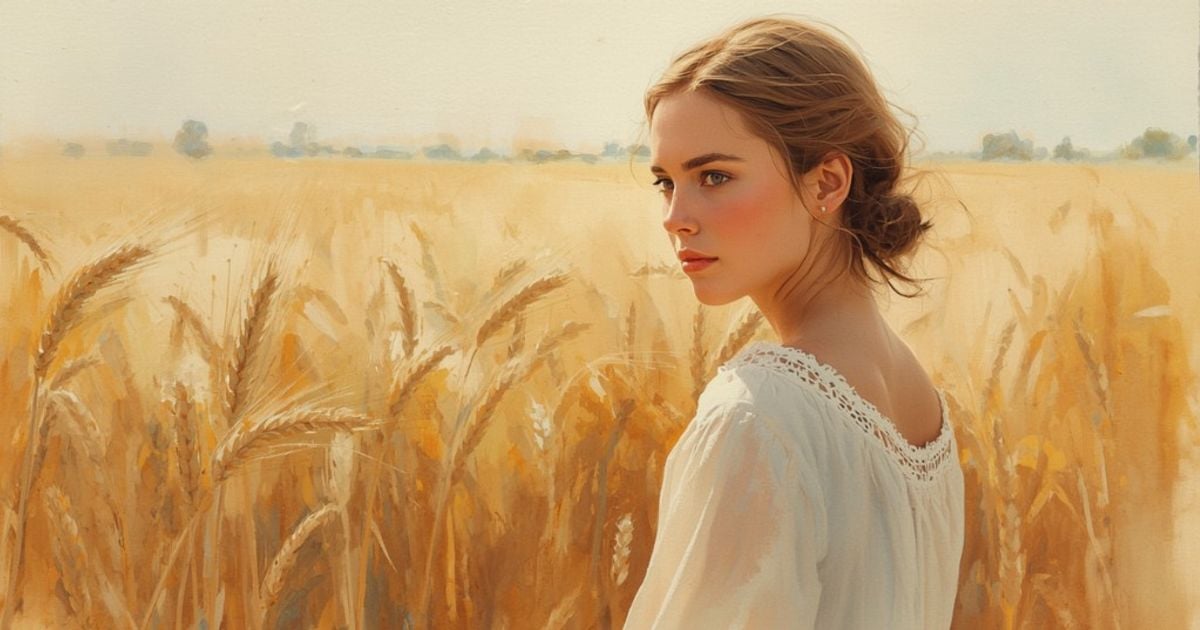
That night Bathsheba tells Liddy to wake her at seven, then wakes at four and rouses Liddy at six, certain her watch has stopped. She says only that Farmer Oak is coming to dine, then whispers the truth, and Liddy's heart goes bumpity-bump. The morning is damp. At twenty minutes to ten Oak goes up the hill, and ten minutes later two umbrellas move through the mist to the church, arm in arm for the first time in their lives. Bathsheba has done her hair as she wore it on Norcombe Hill, and looks to Oak like the girl of his old dream, though she is only three or four-and-twenty. With Tall, Liddy and the parson as witnesses, the deed is done in a remarkably short space of time.
That evening they sit down quietly to tea in her parlour, since Oak has as yet neither money, house nor furniture worth the name. A cannon fires outside, and the old Weatherbury band blows up in the porch with every worm-eaten instrument it owns, which Oak guesses Mark Clark and Jan are behind. They will not stay for supper, though Oak invites them. Coggan and Jacob Smallbury marvel at how naturally Oak says 'my wife', considering how new he is to it, and Bathsheba smiles, for she never laughs readily now. So the story that began on Norcombe Hill ends with her hair done as it was then and Gabriel's arm beneath her own. As the band moves off, Poorgrass sighs, a cheerful man, and says that he wishes Gabriel joy of her, that it might have been worse, and that he feels his thanks accordingly.
Hardy ends his novel with the quietest wedding in literature, and there's profound wisdom in this choice. In 1874, as now, society pressured people to perform their happiness publicly—elaborate weddings, grand gestures, constant displays of affection. But Gabriel and Bathsheba choose privacy because they've learned something crucial: real love doesn't need an audience. This pattern shows up everywhere in working-class life. The coworker who consistently covers your shifts without making a big deal about it versus the one who loudly announces every small favor. The friend who texts to check on you during tough times versus the one who only shows up when there's drama to witness. The partner who handles household responsibilities without expecting praise versus the one who wants applause for basic adulting. Hardy understood that the relationships requiring the most performance often have the least substance. When you're secure in your connection, you don't need external validation. The community's spontaneous celebration of Gabriel and Bathsheba proves this—genuine love creates its own recognition. People can sense authentic partnership and naturally want to honor it. This doesn't mean avoiding all celebration, but rather understanding the difference between sharing joy and seeking validation. When your happiness doesn't depend on other people's reactions, you've found something worth keeping.
Explore this chapter with AI to uncover deeper meaning and practical takeaways.
AI Discussion