
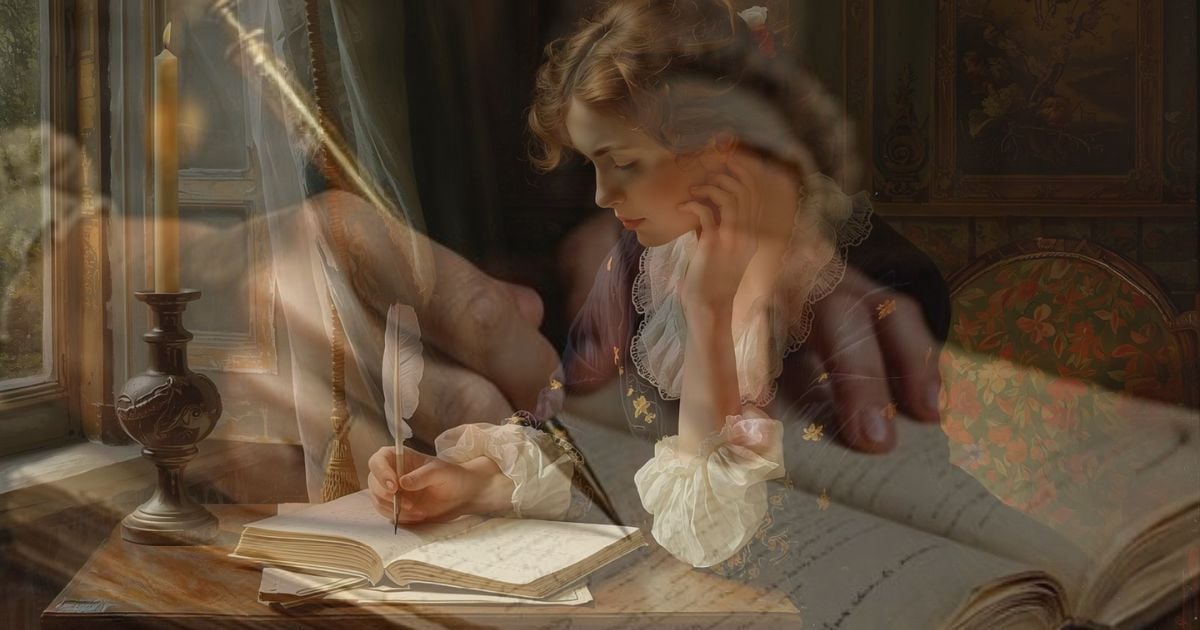
Evelina writes to Villars from Howard Grove on 18 May that all is now over. The letter so anxiously expected has arrived, and her doom is fixed. She has no language for what oppresses her. He formed her heart, she says, and can imagine it. Outcast, and rejected for ever by the man to whom she of right belongs, she will not implore Villars's protection in words that seem to doubt it. She is more secure than ever of his kindness, because he now knows it is her sole dependence. She tries to bear the stroke as if his counsel had already come. At times the feelings are almost too much. She calls it an astonishing letter for a parent to write. Disclaimer alone would have been enough, she thinks, without the contempt and derision. Then she turns the sorrow outwards. Belmont is hoarding anguish he cannot later amend. What the letter says of Villars, she dare not trust herself to comment on.
While she thinks of herself, Madame Duval has already decided the affair will not rest. She heard the letter in great wrath, regretted yielding its direction to people who did not know how to manage it, and vowed to conduct it herself. She means to go to Paris, take Evelina with her, and demand justice face to face. Evelina pleads in vain. She would not, for the universe, be dragged to such an interview with a parent she has never beheld. Lady Howard and Mrs. Mirvan are kinder than ever. Maria tries to console her and, failing that, shares the sorrow. Evelina is glad Sir Clement had already left. The confusion would have betrayed a tale she now wishes buried.
Lady Howard will not consent to her quitting the house until she is given up to Villars, by whose permission she entered it. Duval is extremely angry. The Captain's sneers increase the rage until Duval declares that if Villars's next letter disputes her authority, she will come to Berry Hill and teach him who she is. Unable to judge for herself, Evelina is grateful for a guide. She trusts she will never be repulsed and derided by him. She can still sign herself wholly his. She has just read what a father can do with a signature.
Sir John Belmont's letter reveals something chilling about social power: how perfect etiquette can become a weapon of destruction. In 1778, a gentleman's reputation depended on maintaining proper forms, and Belmont exploits this system brilliantly. He follows every rule of polite correspondence while systematically denying his daughter's humanity. This wasn't accidental rudeness - it was calculated cruelty delivered through impeccable manners. Today's version appears everywhere: the HR manager who uses corporate buzzwords to deliver devastating news, the family member who sends holiday cards but never shows up in crisis, the boss who praises your 'dedication' while blocking your advancement. The pattern is identical - using social conventions to maintain reputation while avoiding real responsibility. What makes polite cruelty so effective is that it's hard to challenge. How do you argue with someone who's being perfectly polite? The victim looks unreasonable for complaining about 'nice' treatment. This is why recognizing the pattern matters. When someone won't use your name, acknowledge your relationship, or offer concrete help, their politeness is performance. The real question becomes: in your own life, how do you respond when someone uses good manners to deliver bad treatment?
Explore this chapter with AI to uncover deeper meaning and practical takeaways.
AI Discussion