
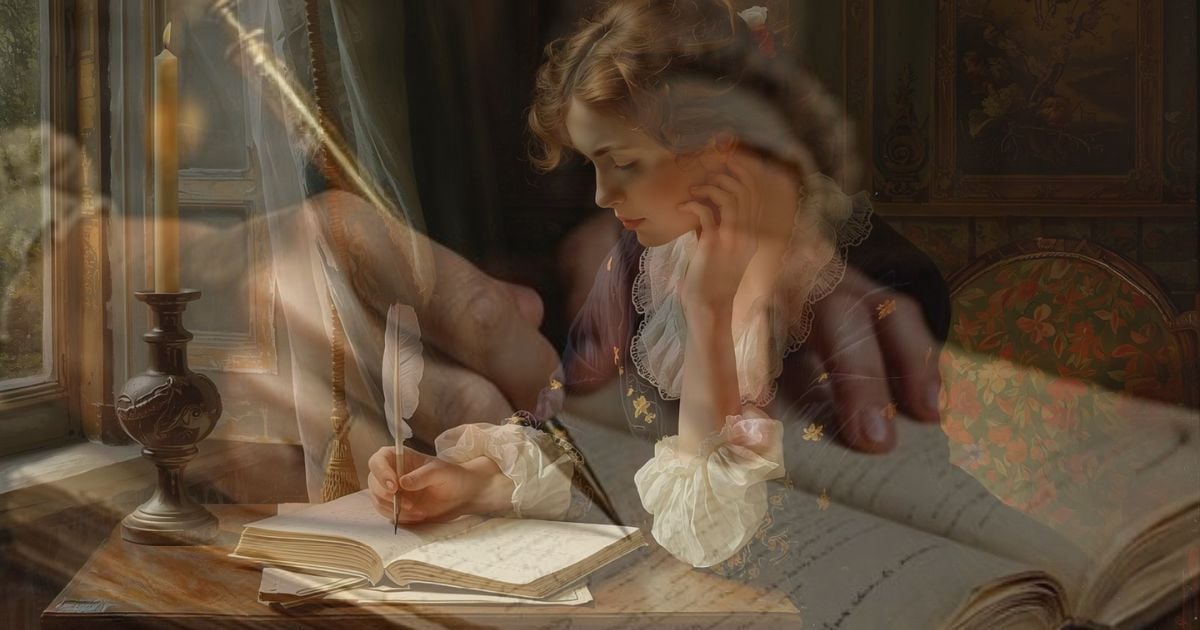
On Tuesday 12 April they come home from the ridotto so late, or rather so early, that Evelina cannot write until morning. They did not go until past eleven. Nobody does. She calls it a terrible reverse of the order of nature: they sleep with the sun and wake with the moon. The room was magnificent and the company splendid. She had made many objections, keeping to her resolution, until Maria laughed her out of them. Maria dances a minuet. Evelina has not the courage. She sees Lord Orville, alone, and he does not observe them. She owns the absurd hope that he might join them, and that she would rather dance with him than with a stranger. Maria's partner is a gentleman of Mrs Mirvan's acquaintance, because young women must not dance with strangers at a public assembly. A fashionable man of about thirty asks Evelina. She will not refuse him outright, as she refused Mr Lovel, and then accept an acquaintance later. She tells him she is already engaged, meaning only to keep herself at liberty to dance or not. He looks incredulous, stays at her side, and questions her about the partner. She begs Mrs Mirvan to lead her to a seat. The Captain sits next to her mother. The stranger sits next to Evelina, calls the missing man mad or a fool, offers to seek him, and asks what coat he has on. She laughs, which encourages him. He guesses the partner may be one of her own creating. She cannot answer. She tells him he is a stranger, and that she is unused and averse to his language. He vows he is gone, then returns and asks Mrs Mirvan who he is talking of. Evelina says she does not know, and wishes he would leave her. The Captain, appealed to, says coldly that the lady is her own mistress, and walks on. Mrs Mirvan says she has not the pleasure of his acquaintance, and that favours and strangers have with her no connection. His entreaties wear her down. She tells Evelina she must either dance once or avoid him by going home. The man's boldness conquers. Evelina calls it the punishment of her deviation from truth.
During the dance he tries every means to make her own the deceit. Lord Orville does not seem to dance. He joins one party and then another. When the stranger points at old or ugly men and demands to see the ingrate, her pride is hurt and her spirits are tired. She looks at Lord Orville and repeats, "Despicable, you think?" She will not affirm and will not deny, hoping his rank will scare the man off. It does not. The stranger knows him. As Mrs Mirvan and Lord Orville walk up, he exclaims at the usurpation and says such a prize was not to be neglected. He takes a fan, Orville takes it back, and Evelina, colouring, tries to recover it. She will not have Orville compelled to dance. She cannot finish a sentence. The man tells Orville that she proposed another dance and wanted only his Lordship's permission. Her spirits fail. She bursts into tears. A hint is enough. Orville leads her to a seat and says, low, that he shall ever think his name honoured by her making use of it. It is about one o'clock. She begs to go home. Mrs Mirvan consents to a chair, and the servants see her back.
In the morning Lord Orville sends to inquire after their health. Sir Clement Willoughby, for that is the persecutor's name, calls, and she will not go downstairs until he is gone. Maria says he is the very man who, at Mrs Stanley's, heard Lord Orville speak of Evelina in so mortifying a manner, and who was glad to hear she was a fool. Evelina is indifferent to Willoughby's opinion. She is sure Orville must now suppose her bold and presuming, and that he can only imagine she used his name from vanity. She will leave this bad city tomorrow, and never again will she enter it. Tonight the Captain takes them to the Fantoccini. She cannot bear him, and she rejoices he was not there at the end, because he seldom smiles except at someone else's expense. She means these to be her last London letters. She is too inexperienced to conduct herself with propriety where everything is new. She wishes she were going at once to Berry Hill, then calls the wish ungrateful to Mrs Mirvan and represses it. She will write the Fantoccini from Howard Grove. The Captain is still taking them out tonight.
Evelina's ridotto disaster reveals something profound about social performance: the very strategies we use to keep our options open often trap us in rigid scripts. She lies to maintain flexibility—if Lord Orville appears, she can dance with him instead. But lies demand consistency, and each follow-up question locks her deeper into a performance she can't escape. Modern life amplifies this trap exponentially. We curate social media personas to seem successful, then exhaust ourselves maintaining the fiction. We claim to be 'fine' in relationships to avoid conflict, then watch resentment poison everything. We minimize our struggles to seem competent, then receive inadequate help. The mechanism is always the same: what starts as strategic flexibility becomes cognitive prison. Burney understood that social anxiety creates its own disasters. Evelina's fear of seeming awkward leads to behaviour far more awkward than simple honesty would have been. The deeper insight is about authenticity versus performance. When we perform to avoid judgment, we often create the very judgment we feared. The person who admits they don't dance well gets gentle understanding. The person caught pretending to have a dance partner gets labelled as fake. Truth has maintenance costs too, but they're predictable and finite. Lies compound interest until they bankrupt your credibility.
Explore this chapter with AI to uncover deeper meaning and practical takeaways.
AI Discussion