
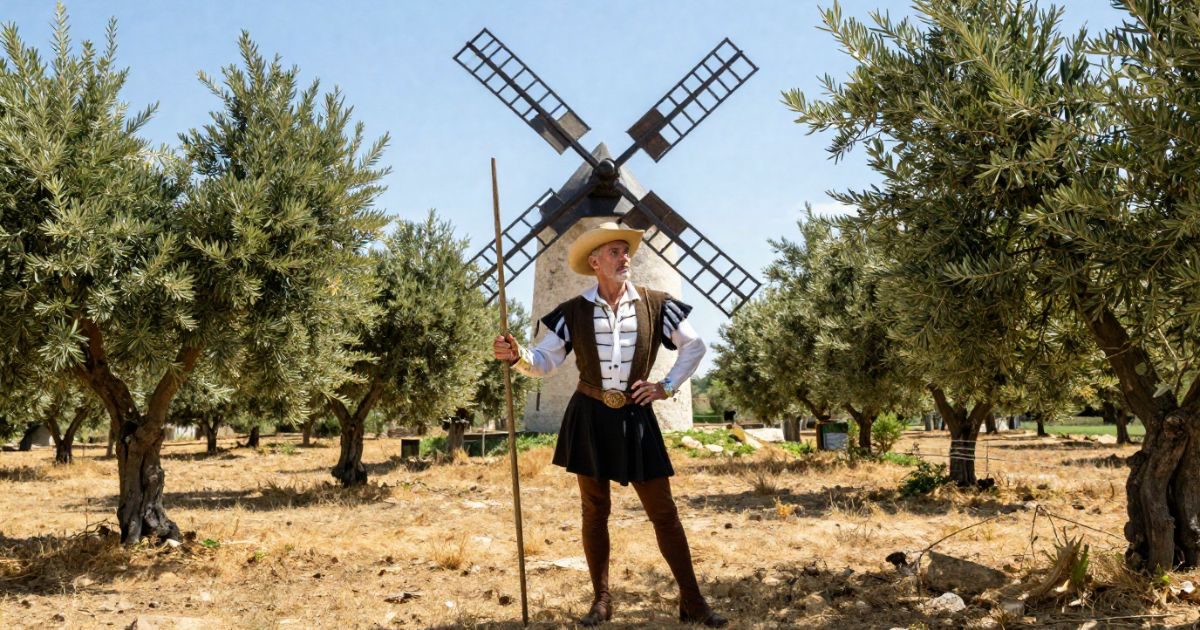
Sancho keeps his word not to sleep and visits the duchess, who seats him as governor and tells him to talk as squire. Then she asks how he dared invent Dulcinea's answer and the wheat-sifting story when he never saw her and never delivered the letter left in the Sierra Morena. Sancho lifts the hangings to be sure no one listens, then says what he has not said in the hall: his master is stark mad, though sometimes so wise that Satan could not better him. The enchantment was Sancho's own device, with no more truth in it than over the hills of Úbeda.
The duchess wonders whether a squire madder than his master deserves an island. Sancho answers with loyalty unto the pickaxe and shovel, a flood of proverbs, and the old story of Wamba taken from the plough while Roderick was taken from pleasures to be eaten by adders. Doña Rodriguez caps it with a ballad of vermin in a king's tomb. The duchess still promises the government and charges him to rule kind-hearted. Then she turns the tables. The country wench, she says, was Dulcinea all along, and Sancho the deceived one. He is willing to believe it, retells Montesinos, and boasts that he is already going all over the world in books.
Talk of Dapple, duennas, and the apple of the eye ends in laughter. The duchess sends him to sleep, then goes to the duke. Between them they plot a rare joke in knight-errant style, the first of several that will become the best adventures in this history.
Sancho keeps his word not to sleep and visits the duchess, who tells him to sit as governor and talk as squire before asking how he dared invent Dulcinea's answer and the wheat-sifting story when he never saw her or delivered the letter. Sancho lifts the hangings to be sure no one listens, then confesses that his master is stark mad though sometimes wise, and that he invented the enchantment with no more truth than over the hills of Úbeda. The duchess wonders whether a squire madder than his master deserves an island; Sancho answers with a torrent of proverbs, Wamba and Roderick, and loyalty unto the pickaxe and shovel while Doña Rodriguez adds a ballad about vermin eating kings. Cervantes makes the cost visible: not only what the characters suffer, but what bystanders must decide once the story can no longer stay private. The chapter asks whether comfort, silence, or intervention is the truer form of care when someone is living inside a plot of their own.
Explore this chapter with AI to uncover deeper meaning and practical takeaways.
AI Discussion