
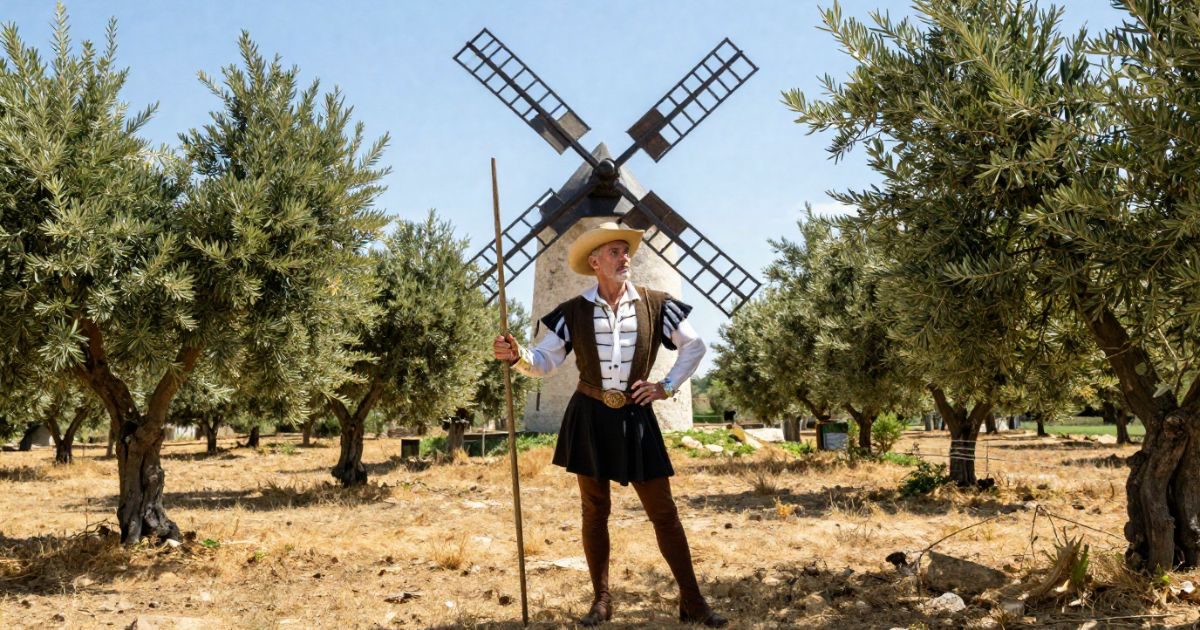
Don Quixote rides on in mourning for the enchanted Dulcinea, so lost in guilt and enchantment theory that Rocinante stops to graze unchecked. Sancho shakes him back to the road with rough cheer: melancholy was made for men, not beasts, and one knight's well-being outweighs every enchantment on earth. They drift into anxious comedy about whether vanquished giants could still find Dulcinea in El Toboso, and Quixote decides to test the enchanters by sending future captives to her as messengers.
A cart crosses their path dressed for Angulo el Malo's play "The Cortes of Death": Death, an angel, an emperor, Cupid, a knight, and a devil carter in Corpus Christi costumes. Quixote first readies for battle, then accepts the players' explanation and wishes them well. A merry-andrew with bells and ox-bladders frightens Rocinante into bolting; Quixote falls, Sancho leaps off to help, and the dancing devil mounts Dapple and beats him toward the festival village.
Dapple returns on his own when the devil dismounts, but Quixote still threatens to punish the company for discourtesy. Sancho begs him off: actors are a protected class, even murderers among them walk free. When Death's squadron forms with stones, Sancho adds the decisive point: none of these kings and emperors are dubbed knights, so Quixote's code forbids the sword. They wheel away; the cart rolls on to its show, and Sancho's counsel has turned an absurd collision into peace.
Don Quixote rides on in mourning for the enchanted Dulcinea, so lost in guilt and enchantment theory that Rocinante stops to graze unchecked. Sancho shakes him back to the road with rough cheer: melancholy was made for men, not beasts, and one knight's well-being outweighs every enchantment on earth. They drift into anxious comedy about whether vanquished giants could still find Dulcinea in El Toboso, and Quixote decides to test the enchanters by sending future captives to her as messengers. A cart crosses their path dressed for Angulo el Malo's play "The Cortes of Death": Death, an angel, an emperor, Cupid, a knight, and a devil carter in Corpus Christi costumes. Quixote first readies for battle, then accepts the players' explanation and wishes them well. A merry-andrew with bells and ox-bladders frightens Rocinante into bolting; Quixote falls, Sancho leaps off to help, and the dancing devil mounts Dapple and beats him toward the festival village. Cervantes makes the cost visible: not only what the characters suffer, but what bystanders must decide once the story can no longer stay private. The chapter asks whether comfort, silence, or intervention is the truer form of care when someone is living inside a plot of their own.
Explore this chapter with AI to uncover deeper meaning and practical takeaways.
AI Discussion