
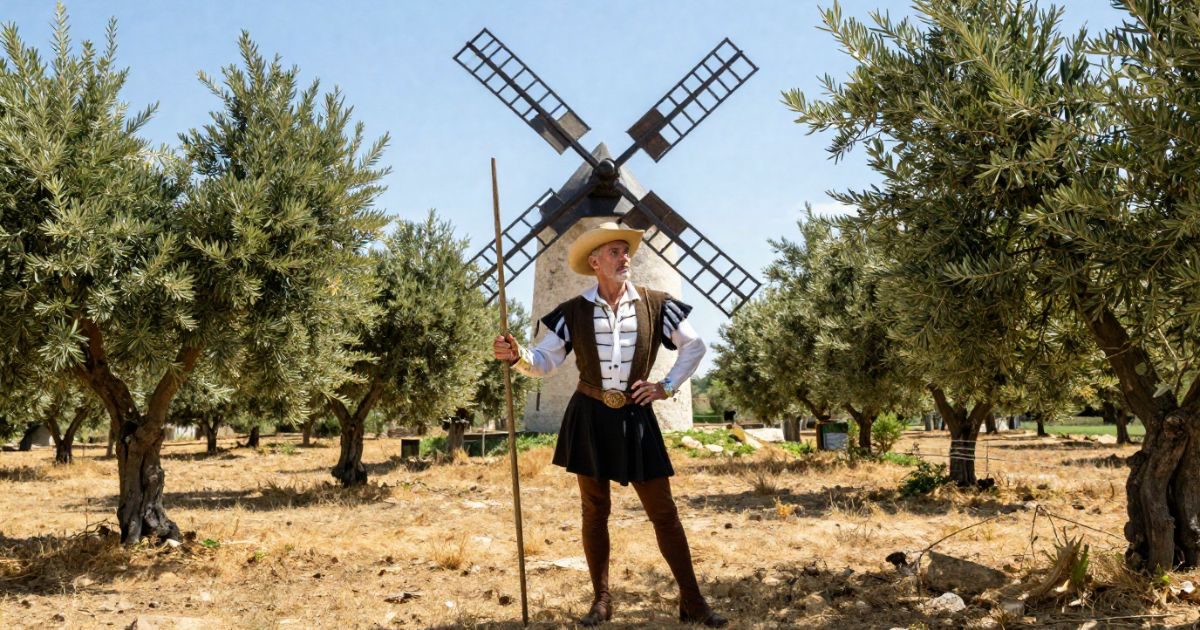
Quixote waits for Samson Carrasco, unable to believe his deeds are already in print while enemy blood is still fresh on his sword. He fears a Moorish author may have treated Dulcinea indecently, yet comforts himself that a knight's history must be lofty and true.
Samson, a sharp-witted wag of about twenty-four, kneels, kisses his hand, and confirms the book. He praises Cide Hamete Benengeli and reports more than twelve thousand copies across Spain and abroad, with talk of an Antwerp printing. They debate favourite adventures, Sancho's blanket toss, poet versus historian, and the misplaced novel The Ill-advised Curiosity. Quixote calls bad historians forgers and compares his history to Orbaneja's cock that needed a label. Samson says Sancho is the second person in the book, and that some would rather hear him talk than the cleverest character in it. The book pleases almost everyone: children, pages, and lords' antechambers cry "There goes Rocinante."
Critics still complain of omitted drubbings, the thief who stole Dapple, and what Sancho did with the hundred crowns. Sancho leaves for wine and dinner rather than open the accounts. The bachelor stays to eat pigeons and talk chivalry. After sleep, Sancho returns, and the conversation waits to resume.
Quixote waits for Samson Carrasco, unable to believe his deeds are already in print while enemy blood is still fresh on his sword. He fears a Moorish author may have treated Dulcinea indecently, yet comforts himself that a knight's history must be lofty and true. Samson confirms the book, praises Cide Hamete Benengeli, and reports more than twelve thousand copies across Spain and abroad. They debate favourite adventures, Sancho's blanket toss, poet versus historian, and the misplaced novel The Ill-advised Curiosity. Quixote calls bad historians forgers and compares his history to Orbaneja's cock that needed a label. Cervantes makes the cost visible: not only what the characters suffer, but what bystanders must decide once the story can no longer stay private. The chapter asks whether comfort, silence, or intervention is the truer form of care when someone is living inside a plot of their own.
Explore this chapter with AI to uncover deeper meaning and practical takeaways.
AI Discussion