
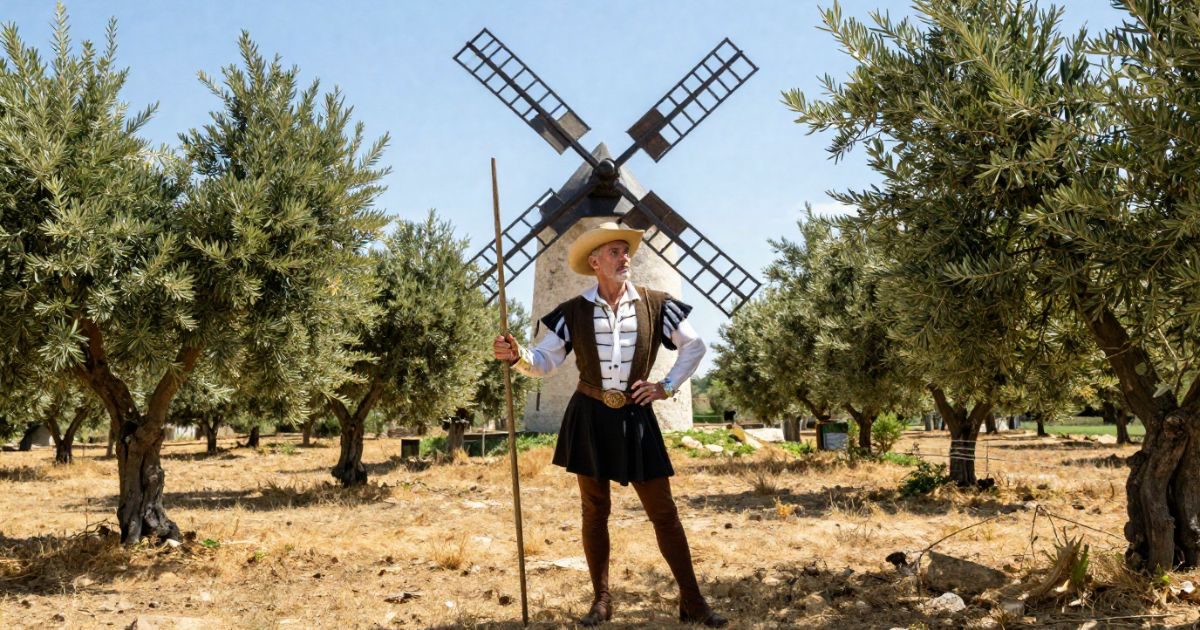
The captive ends his tale and Don Fernando wishes it could begin again tomorrow. Night brings a Judge of appeal with his daughter Doña Clara; Don Quixote greets them with a speech about castles, arms, letters, and beauty, while Dorothea, Luscinda, and Zoraida welcome the girl. The women retire to the garret; the captive learns the Judge is his brother Juan Perez de Viedma, bound for Mexico with his motherless daughter, and fears a poor return will bring shame.
The curate offers to test reception indirectly. At supper he tells a story of a captive comrade named Ruy Perez de Viedma from Leon: the father's division of property, the choice of arms, Lepanto, Algiers, Zoraida, and French robbery. The Judge listens with tears, cries that the captain is his eldest brother, and laments that no letter came when ransom could have saved years of suffering; he would cross the sea for Zoraida who was good to his brother.
The curate brings Zoraida and the captain out. The brothers embrace; the Judge puts all he has at Zoraida's disposal; Christian and Moor weep together while Don Quixote attributes everything to chivalry. They agree the captain and Zoraida will go to Seville and send word to their father; the Judge cannot delay his voyage. Quixote offers to guard the castle against giants; Sancho stretches on his ass's trappings. As the ladies sleep, a voice sings at dawn so sweetly that Dorothea and Clara listen, and Cardenio says a muleteer is enchanting the night.
The captive ends his tale and Don Fernando wishes it could begin again tomorrow. Night brings a Judge of appeal with his daughter Doña Clara; Don Quixote greets them with a speech about castles, arms, letters, and beauty, while Dorothea, Luscinda, and Zoraida welcome the girl. The women retire to the garret; the captive learns the Judge is his brother Juan Perez de Viedma, bound for Mexico with his motherless daughter, and fears a poor return will bring shame. The curate offers to test reception indirectly. At supper he tells a story of a captive comrade named Ruy Perez de Viedma from Leon: the father's division of property, the choice of arms, Lepanto, Algiers, Zoraida, and French robbery. The Judge listens with tears, cries that the captain is his eldest brother, and laments that no letter came when ransom could have saved years of suffering; he would cross the sea for Zoraida who was good to his brother. Cervantes makes the cost visible: not only what the characters suffer, but what bystanders must decide once the story can no longer stay private. The chapter asks whether comfort, silence, or intervention is the truer form of care when someone is living inside a plot of their own.
Explore this chapter with AI to uncover deeper meaning and practical takeaways.
AI Discussion