
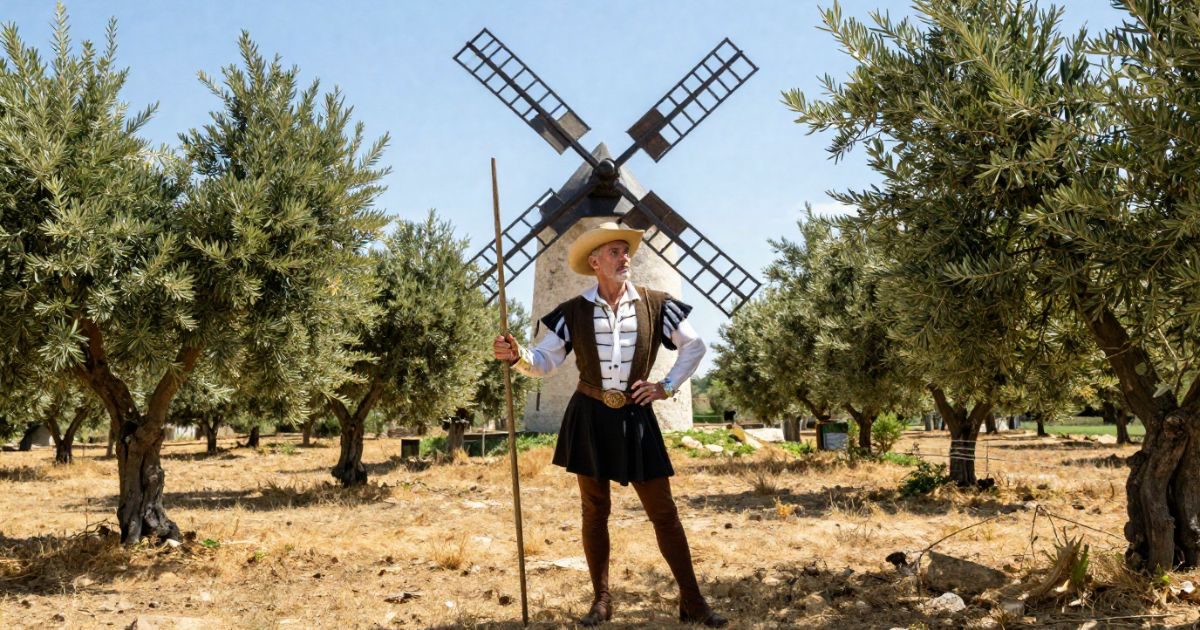
The curate's plan looks so good that they borrow a petticoat and an ox-tail beard on the spot, leaving a cassock in pledge. The landlady dresses him in slashed velvet from the time of King Wamba, and Maritornes promises a rosary for their success. Hardly out of the inn, the priest blushes at the costume, calls it indecorous, and swaps roles, resolved to drop the whole matter rather than ride as a woman. Sancho laughs, takes the lead, and is coached in the lie that will do the work the lost notebook cannot: Dulcinea received the letter, could not read it, and by word of mouth commands Quixote to come at once, on pain of her displeasure. They wait in a shaded glen in the August heat while Sancho searches the broom-marked rocks.
What they hear is not a rustic air. Courtly verses name Disdain, Jealousies, Absence, then Love, Chance, Heaven, then Change, Madness, or Death, and a sonnet accuses hypocrisy of wearing Friendship's veil. Following the sighs, they find Cardenio as Sancho described him, head on his breast, sane enough this time to speak. He will not take comfort first. Heaven may send advisers into the wilderness, but if he leaves this evil he falls into a greater, and he becomes like a stone when the fit overmasters him. Hear the cause, he says, and you will spare yourselves the trouble of consoling grief that is beyond the reach of it.
He resumes where Quixote interrupted him. Luscinda's note had already shown Fernando how to ruin him: ask her father, and the marriage would be reasonable. Cardenio dared not speak to his own father while Duke Ricardo's favour still hung fire. Fernando offered to do it, then bought six horses on purpose and sent him to the elder brother for the money. The night before he left, Luscinda wept at the grating, a lump in her throat, and he took the tears for love of him. The brother kept him eight days where the duke would not see him. Four days in, a stranger arrived with a hundred reals, a gold ring, and her letter: Fernando had demanded her, her father had favoured the richer match, and the betrothal was two days off, witnesses only Heaven and a few of the household. Cardenio flew home, found her in crimson and white with a dagger hidden, and hid himself behind the tapestries. At "Will you take Don Fernando," he waited for the dagger or the truth. He heard, in a faint voice, "I will."
The ring binds them. Luscinda faints with her hand on her heart, and in her bosom they find a sealed paper Fernando reads by torchlight while he sits thinking and does not help her. Cardenio, calling himself a coward for not rushing forward, rides out like Lot without looking back, curses her as covetous, then excuses a girl trained to obey, and concludes that feeble love, little reflection, and a craving for rank made her forget her word. His mule dies among the crags; goatherds find him raving and leave food on the rocks. He lives in a cork-tree hollow, snatches bread from shepherds when the fit is on him, and will not take any medicine that does not return Luscinda. The impossibility of consolation, he says, consoles others and only deepens him. The curate never gets to answer. A melancholy voice cuts in, and the historian ends Part Three on that interruption.
The curate and barber dress as damsel and squire, swap roles when the priest blushes at the costume, and coach Sancho to lie: Quixote's letter reached Dulcinea, and she commands him to come at once. While Sancho searches the glen, they hear courtly verses in the wilderness and find Cardenio sane enough to speak. He asks them to hear his story before they comfort him, then finishes what Quixote interrupted: Fernando's treachery, the false errand for horses, Luscinda's desperate letter, and the hidden wedding where Cardenio watches from behind the tapestries. Cervantes makes the cost visible: not only what the characters suffer, but what bystanders must decide once the story can no longer stay private. The chapter asks whether comfort, silence, or intervention is the truer form of care when someone is living inside a plot of their own.
Explore this chapter with AI to uncover deeper meaning and practical takeaways.
AI Discussion