
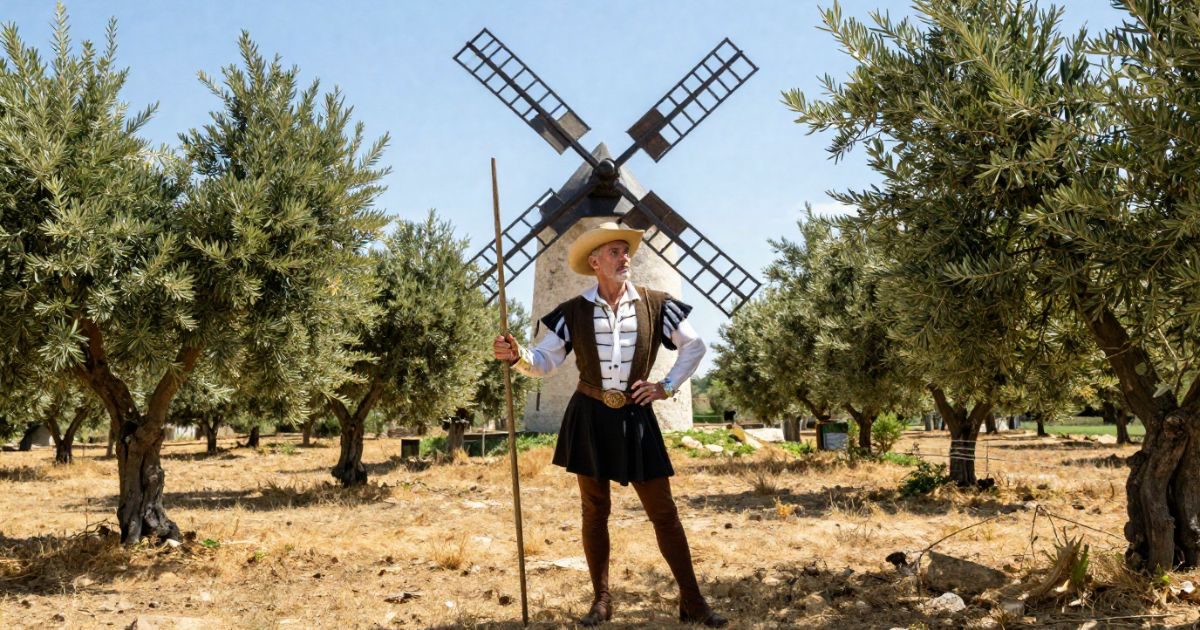
After his defeat a fever keeps Don Quixote in bed for six days while the curate, Samson, the barber, and Sancho try to cheer him with pastoral plans, dogs named Barcino and Butron, and an eclogue that will outshine Sannazaro. The doctor says his body is failing and his soul needs care; then Quixote wakes lucid, blesses God's mercy, and declares his reason free of the shadows chivalry books cast over it.
He renounces Don Quixote of La Mancha for Alonso Quixano the Good, calls Amadis and all knight-errantry odious, and insists on confession and a will while Samson still thinks it another craze. The will clears Sancho's accounts, leaves the estate to his niece Antonia with wages for the housekeeper, forbids her to marry any man who knows chivalry books, and asks his executors to beg Avellaneda's author forgiveness for provoking the fake Second Part. Sancho weeps and begs him to live and take to the fields in shepherd's trim; Quixote answers with the proverb about last year's nests and tells the notary to proceed. He receives the sacraments, dies calmly amid tears, and the notary records that Alonso Quixano the Good passed naturally so no false author may revive him. Samson writes an epitaph, and Cide Hamete hangs up his pen with a warning to any story-teller who would profane Don Quixote's rest.
After his defeat a fever keeps Don Quixote in bed for six days while the curate, Samson, the barber, and Sancho try to cheer him with pastoral plans, dogs named Barcino and Butron, and an eclogue that will outshine Sannazaro. The doctor says his body is failing and his soul needs care; then Quixote wakes lucid, blesses God's mercy, and declares his reason free of the shadows chivalry books cast over it. He renounces Don Quixote of La Mancha for Alonso Quixano the Good, calls Amadis and all knight-errantry odious, and insists on confession and a will while Samson still thinks it another craze. The will clears Sancho's accounts, leaves the estate to his niece Antonia with wages for the housekeeper, forbids her to marry any man who knows chivalry books, and asks his executors to beg Avellaneda's author forgiveness for provoking the fake Second Part. Sancho weeps and begs him to live and take to the fields in shepherd's trim; Quixote answers with the proverb about last year's nests and tells the notary to proceed. He receives the sacraments, dies calmly amid tears, and the notary records that Alonso Quixano the Good passed naturally so no false author may revive him. Samson writes an epitaph, and Cide Hamete hangs up his pen with a warning to any story-teller who would profane Don Quixote's rest. Cervantes makes the cost visible: not only what the characters suffer, but what bystanders must decide once the story can no longer stay private. The chapter asks whether comfort, silence, or intervention is the truer form of care when someone is living inside a plot of their own.
Explore this chapter with AI to uncover deeper meaning and practical takeaways.
AI Discussion