
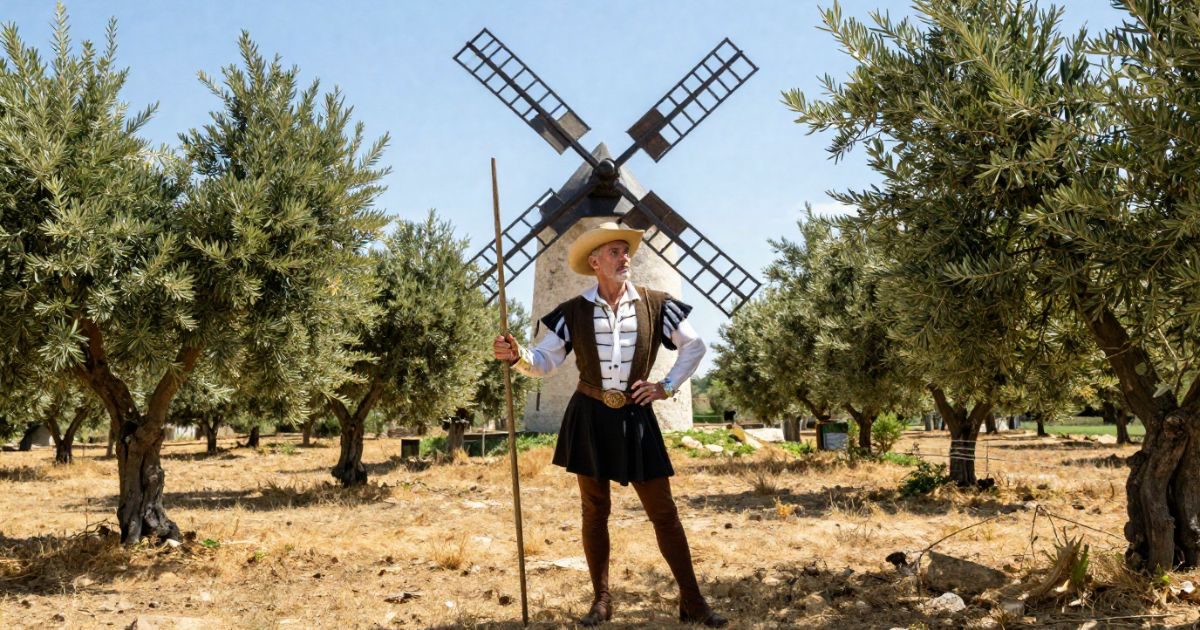
Cured of his cat scratches and restless in castle ease, Don Quixote is about to ask leave for Saragossa when Doña Rodriguez and her shamed daughter enter in mourning. The duenna reminds him of the farmer's son who seduced the girl, and says that to expect justice from the duke is to ask pears from an elm. She wants a challenge before the knight departs. Don Quixote vows to spare the humble and chastise the proud, waives gentle blood to equal the rustic, and throws his glove. The duke accepts combat in six days in the courtyard, lance and shield and full armour, without trickery. The duchess lodges the pair as lady adventurers demanding justice, to the consternation of the other servants.
The page returns from Teresa Panza with letters read at table. Teresa thanks the duchess for coral and the hunting suit, sends acorns she picked herself, and asks coach money for Court, where a loaf costs a real. Her letter to Sancho swears she was within two fingers' breadth of madness with joy, reports that the curate, the barber, and Samson Carrasco call the governorship a delusion, and fills out the village news: a painter who took two ducats and painted nothing, a tonsured lad in a promise-of-marriage suit, no olives, soldiers who took three girls.
Sancho's letter to Don Quixote is read too, and raises doubts about the governor's simplicity. The page gives the duchess the acorns and a Tronchon cheese. Hamete turns to the end of the great Sancho Panza, flower and mirror of island governors.
Cured of his cat scratches and longing for Saragossa, Don Quixote is about to ask leave when Doña Rodriguez and her shamed daughter enter in mourning; the duenna reminds him of the seduced daughter's wrong and, since pears from the elm tree are vain with the duke, asks him to challenge the farmer's son before he departs. Quixote vows to spare the humble and chastise the proud, waives gentle blood to equal the rustic, throws his glove, and the duke accepts the combat in six days in the courtyard; the duchess lodges them as lady adventurers demanding justice. Cervantes makes the cost visible: not only what the characters suffer, but what bystanders must decide once the story can no longer stay private. The chapter asks whether comfort, silence, or intervention is the truer form of care when someone is living inside a plot of their own.
Explore this chapter with AI to uncover deeper meaning and practical takeaways.
AI Discussion