
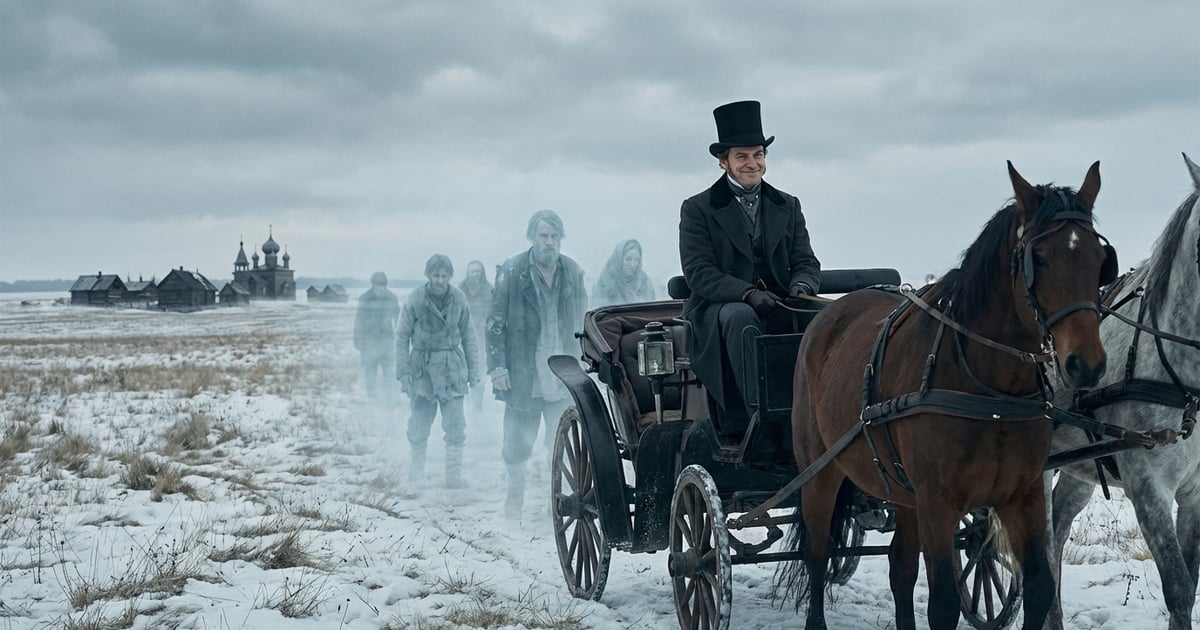
At the Chief of Police's the tchinovniks look thinner; frockcoats hang loose; even ring-flashing Semen Ivanovitch has shrunk. Gogol notes the total absence of common sense in Russian assemblies without a leader. Someone observes Kopeikin lacked an arm and a leg; the Postmaster retreats, citing English mechanical legs that vanish at a spring's touch. The assembly briefly feels relief, then invents worse possibilities. Other theories name Napoleon in disguise. Nozdrev, fetched from marked cards, confirms every accusation with new lies about forged millions and a staged wedding until the room empties in disgust. At the Governor's house a footman says I am forbidden to admit you. Gogol ends on packing and scratched heads, the farce of escape already foreshadowing tomorrow's overslept horses and unharnessed britchka.
A new Governor-General looms; two alarming documents about forgers and fugitives sit in the Governor's hands; dead souls and an alleged abduction have already poisoned the air. They agree Chichikov seems too respectable for a brigand, until the Postmaster cries that he is Captain Kopeikin and tells the epic of the wounded veteran cheated by the Petersburg Commission, fed on cabbage soup, promised pensions never paid, and vanished into Ryazan banditry. Chichikov, nursing a sore throat with fig juice and camomile poultices, rereads soul lists and a novel to kill time, wonders why drozhkis no longer wait at the inn. The President mumbles nonsense; the Chief of Police, Vice-Governor, and Postmaster receive him with embarrassment that feels like madness.
He walks the town smiling to himself about the Governor's daughter until each shut door proves the smile obsolete. Nozdrev arrives at the inn uninvited, demands tea and someone else's pipe, boasts he defended Chichikov at school, then drops that officials think him a note forger and abductor and that the Public Prosecutor died of the scare. Chichikov orders the britchka at dawn, bids Petrushka cram portmanteau and dispatch-box, and watches Selifan linger on the stairs scratching his head, the universal Russian gesture that may mean refusal, confusion, or drink. Panic has closed every door; flight is the only plot left, and even the coachman may not cooperate.
Gogol understood something profound about human psychology: we'd rather believe an elaborate lie than admit we don't know something, especially when our security feels threatened. The town officials in Dead Souls can't figure out Chichikov, so they create increasingly wild explanations, spy, counterfeiter, Napoleon in disguise. Each theory sounds more authoritative than saying 'We have no idea who this guy is.' This isn't stupidity; it's how fear rewires our thinking. Uncertainty feels dangerous, particularly when jobs or reputations are at stake. The brain craves explanations, even wrong ones, because they provide the illusion of control. Today, we see this same pattern everywhere: workplace rumours during layoffs, neighbourhood speculation about new residents, social media theories about any unexplained event. The more scared people are, the more elaborate their explanations become. What's particularly insidious is how these theories gain credibility through repetition. The Postmaster's Captain Kopeikin story isn't intentional deception, he genuinely believes he's solved the mystery. When multiple people add details, the collective fiction starts feeling like fact. Understanding this pattern is crucial for modern navigation. Whether you're the target of workplace speculation or watching your community spiral into conspiracy theories, recognising panic logic helps you respond strategically rather than defensively. The question isn't whether people will create stories when they're scared, they will. The question is whether you'll help them return to reality or get swept up in their collective fiction.
Explore this chapter with AI to uncover deeper meaning and practical takeaways.
AI Discussion