
Marx asks what it takes to compare wages between nations. First, the day-wage for the same trade in each country must be reduced to the same working day, and time-wages turned into piece-wages, because only a piece-wage measures both pace and output. Each nation has its own average intensity of labour, and on the world market a more intense national day makes more value and more money. Where capitalist production is more developed, labour is more productive and money is worth less, so nominal wages are higher. That does not prove the workers there are better off. The daily wage can be higher in the richer country while the price of labour, set against the product and the surplus-value, is higher in the poorer one.
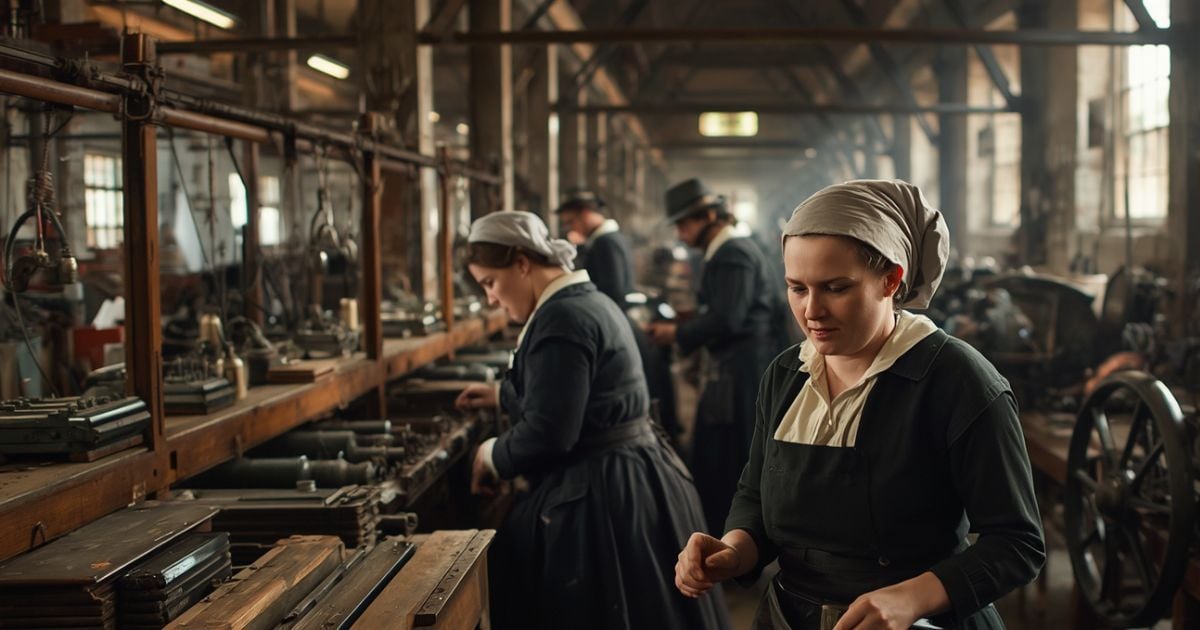
The factory reports bear this out. J. W. Cowell, who studied the spinning trade for the Factory Commission of 1833, found that English wages are virtually lower to the capitalist, though higher to the operative, than on the Continent. The factory inspector Alexander Redgrave showed in 1866 that continental labour, with lower pay and far longer hours, was dearer in proportion to the product. In the Russian mills, run by English managers, the work went on day and night for shameful pay, and the trade survived only because foreign competition was banned. Redgrave's table puts a number on the gap: one person to 74 spindles in Great Britain, against 14 in France and 28 in Russia.
English railway companies in Eastern Europe and Asia learned the same lesson. They worked English working men beside native labourers and found that wages followed the intensity of work, while the relative price of labour ran the other way. Then Marx turns on H. Carey, who argued that wages everywhere rise and fall with the productiveness of labour. Marx says his own analysis shows the claim to be absurd, and that Carey never proved his premises anyway. His last jab is that such a thinker deserved to become the secret source of the harmonious wisdom of Bastiat and the other free-trade optimists.
Marx identified a pattern that dominates modern economic decisions: the cheapest option upfront frequently becomes the most expensive over time. He showed how German workers earning half the wages of English workers actually cost their employers more per unit produced because of lower productivity. This wasn't about worker laziness—it reflected differences in training, tools, and work organization. Today, this pattern appears everywhere. Hospitals cut nursing staff to reduce 'labor costs,' then spend more on overtime, agency workers, and complications from understaffing. School districts hire cheaper substitute teachers, then deal with classroom chaos and learning gaps. Families choose the lowest-cost daycare, then face hidden fees and developmental delays. Companies outsource to the cheapest bidder, then discover quality problems cost more than the savings. The pattern persists because decision-makers focus on visible costs while ignoring multipliers like productivity, quality, reliability, and retention. Understanding this helps workers argue for better compensation by demonstrating their total value, helps consumers avoid false economies, and helps managers make decisions based on true costs rather than apparent savings. The key insight is that cost and price are different things—and in competitive markets, the real bargains often come disguised as the expensive options.
Explore this chapter with AI to uncover deeper meaning and practical takeaways.
AI Discussion