
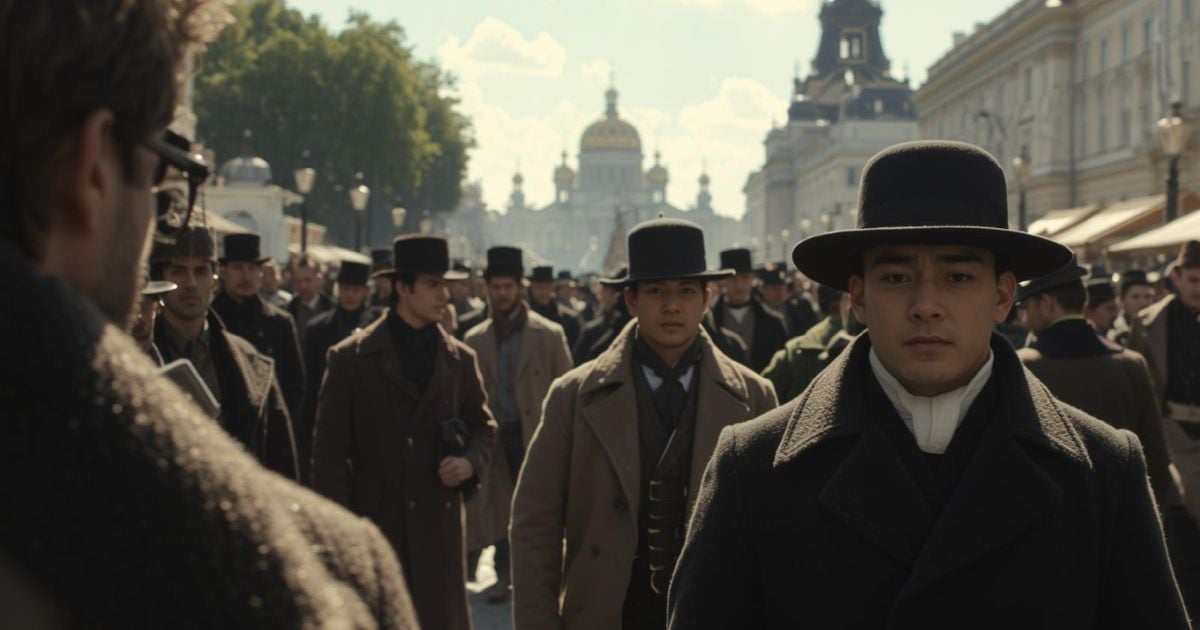
In the tavern, flushed on champagne, Svidrigailov tells Raskolnikov how he once pursued Dunya. He opens with debtors' prison and Marfa Petrovna buying him out, then the unwritten marriage contract: he would stay her husband, never leave without permission, never keep a permanent mistress, while she allowed maids with her secret knowledge and demanded he confess any serious passion. He speaks a decorous funeral oration for Marfa Petrovna, then turns to your sister: Marfa Petrovna fell in love with Dunya as governess, told her every family secret, and resented Svidrigailov's silence until rumors about his past filled Dunya's ears.
Raskolnikov interrupts with Luzhin's charge about a child's death and the footman who came after death to fill his pipe; Svidrigailov waves both away with annoyance but admits the gossip worked in his favor. He describes Dunya's natural aversion giving way to pity for a lost soul, the bird flying into the cage of herself, bound to want to save him, and boasts how he used flattery, the weapon that never fails, because nothing in the world is harder than speaking the truth and nothing easier than flattery. He calls her a potential martyr, almost morbidly chaste, then the Parasha scandal, garden confrontations, interviews, tears, and eyes that frightened her and later haunted his dreams until frenzy drove him to offer thirty thousand roubles to run away to Petersburg with eternal vows. Marfa Petrovna then nearly matched Dunya to Luzhin through a scoundrelly attorney, the same bargain he had proposed.
Raskolnikov, seeing the wine take hold, accuses him of coming to Petersburg with designs on Dunya. Svidrigailov deflects, jokes about secrets between lovers, then answers in one word that he is going to get married, a betrothed arranged by Madame Resslich: a sixteen-year-old in a muslin frock, diamonds worth fifteen hundred roubles, kisses on his knee, and talk of nature and truth while everyone deceives himself. He brags of a cancan hall, a thirteen-year-old dancer, and taking home a mother he flattered with money and lessons, until Raskolnikov calls him a depraved Schiller and Svidrigailov laughs that he tells these tales for the pleasure of hearing outcries. Philip brings water; Svidrigailov pays, grows ruder, and walks toward the Hay Market while Raskolnikov follows on the pavement, uneasy and suspicious of whatever appointment or design still hides behind the monologue.
Part VI Chapter IV is Svidrigailov's monologue in the tavern, not Raskolnikov's confession to Sonia or legal aftermath. He details Marfa Petrovna's contract, Dunya's pity, flattery, the thirty-thousand offer, Luzhin's near-match, a sixteen-year-old betrothal, and a cancan anecdote before Raskolnikov follows him toward the Hay Market. Dostoevsky binds jealousy, seduction theory, and disgust before the next movement in Part VI Chapter V.
Explore this chapter with AI to uncover deeper meaning and practical takeaways.
AI Discussion