
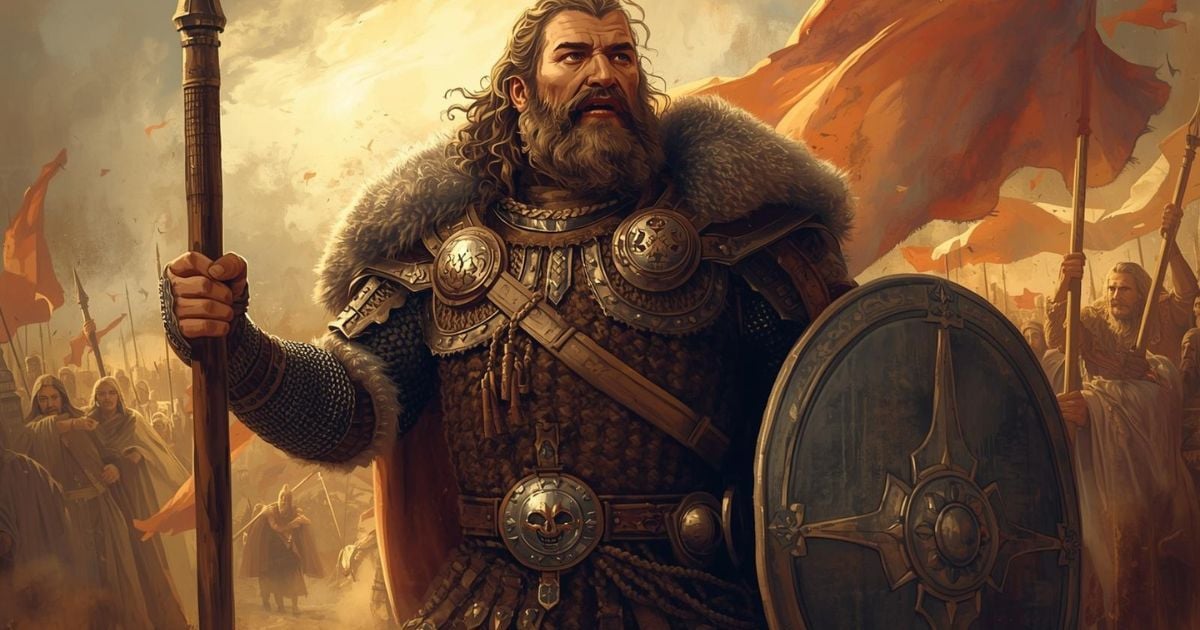
While King Hrothgar remains trapped in despair, unable to solve the Grendel crisis that's destroying his people, news of the monster's reign of terror reaches Beowulf in Geatland. Unlike Hrothgar, who's paralyzed by the enormity of the problem, Beowulf immediately sees an opportunity to help and prove himself.
He doesn't hesitate or overthink, he gathers fourteen trusted warriors and sets sail for Denmark.
This moment reveals a crucial difference between leaders: some get overwhelmed by problems, while others see them as chances to make a difference. Beowulf's friends don't try to talk him out of this dangerous mission; instead, they support his decision and wish him glory. This shows the power of having people in your life who believe in your potential rather than trying to keep you small and safe. The sea journey itself becomes almost magical, the ship glides like a bird, suggesting that when you're moving toward your purpose, even the elements seem to help. When they reach Danish shores, a coast guard challenges them aggressively, demanding to know who they are and what they want. But instead of being intimidated, Beowulf and his men stand their ground confidently. The guard is actually impressed by Beowulf's commanding presence, noting he's never seen a more impressive warrior. This encounter teaches us that how we carry ourselves matters, confidence and purpose are visible to others, and they often open doors that fear and hesitation keep closed. Beowulf's journey represents the moment when someone stops being a bystander to problems and becomes part of the solution.
Beowulf's immediate response to hearing about Grendel reveals something crucial about human nature: we all receive the same information, but we process it through completely different filters. Hrothgar heard 'unsolvable monster problem' and felt overwhelmed. Beowulf heard 'people need help' and saw possibility. This isn't about courage versus cowardice, it's about how we frame challenges. In Anglo-Saxon culture, reputation was everything, but it had to be earned through action, not inherited or declared. Beowulf understood that problems are opportunities to build legacy. Today, we face the same choice daily. The understaffed workplace, the struggling family member, the community issue everyone complains about but no one addresses, these are all Grendel moments. Some people see only the difficulty and retreat into analysis. They research solutions endlessly, attend meetings, make plans, gather more information. Others see the same situation and think: 'Someone needs to act, and it might as well be me.' The difference isn't intelligence or resources, it's willingness to engage with uncertainty. Notice how Beowulf doesn't go alone; he brings his fourteen warriors. Smart action isn't reckless action. But neither is it perfect action. It's purposeful movement toward problems that matter, trusting that competence develops through engagement, not preparation.
Explore this chapter with AI to uncover deeper meaning and practical takeaways.
AI Discussion