
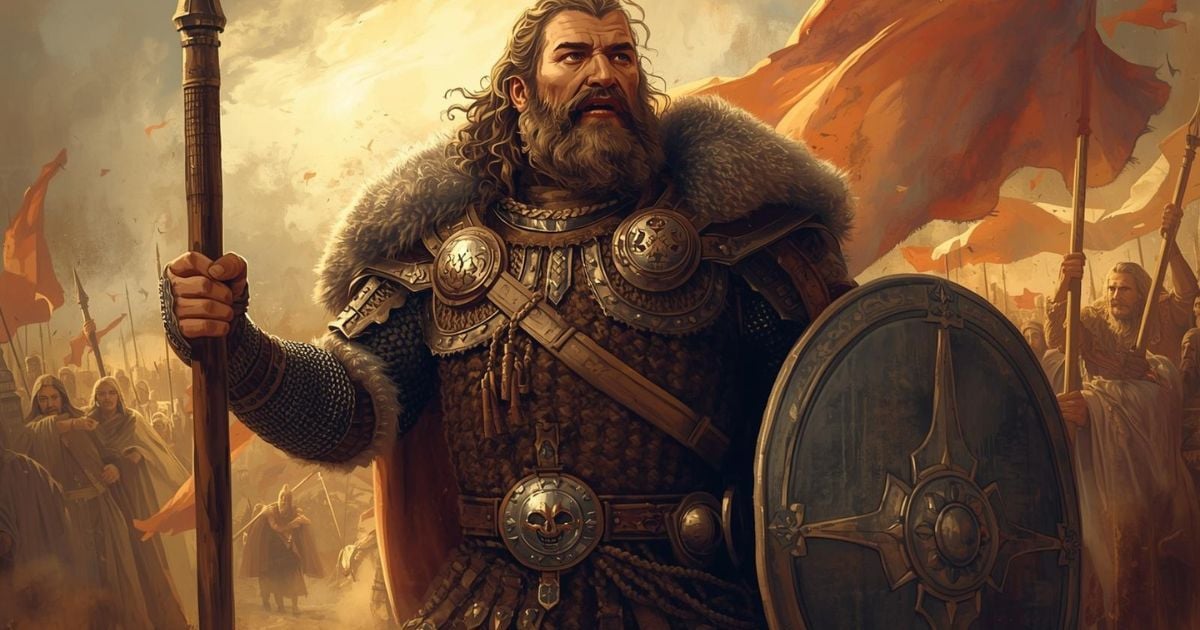
The dragon's rampage reaches Beowulf's own kingdom, burning his great hall to the ground. When Beowulf hears the news, he's devastated, not just by the destruction, but by a gnawing fear that he's somehow brought this catastrophe on his people through some unknown sin. This is a man who's spent his life protecting others, now wondering if he's failed them. The chapter reveals how even heroes struggle with self-doubt when disaster strikes close to home.
Beowulf decides to face the dragon alone, refusing to risk other warriors' lives. This isn't just bravery, it's the complex psychology of someone who's always been the protector, unable to accept that he might need help. The poet takes us through Beowulf's greatest hits: his victory over Grendel, his escape from the disastrous Frisian raid where his king died, his respectful handling of succession politics when offered a throne he felt belonged to another.
These memories aren't just nostalgia, they're Beowulf building his confidence, reminding himself that he's survived impossible odds before. But there's something different this time. He orders an iron shield instead of wood, knowing fire changes the game.
At fifty-plus years old, he's calculating like never before, yet still choosing to go it alone. The chapter captures that moment when experience meets mortality, when someone who's always been invincible starts to feel time's weight, but can't change who they fundamentally are.
Beowulf's tragedy isn't that he's weak, it's that his strength has become a cage. After decades of being the hero, he literally cannot imagine another way to be. This psychological trap is everywhere in communities on tight wages, where self-reliance isn't just a value, it's often a survival necessity. The single parent who works double shifts rather than ask family for help. The neighbour who fixes everyone's car but won't admit their own is breaking down. The community volunteer who burns out organizing everything alone rather than 'burden' others with responsibility. What makes this pattern so dangerous is that it masquerades as virtue. We celebrate these heroic helpers, which reinforces their isolation. But sustainable strength requires building systems, not just being the system. The most effective community leaders learn to step back so others can step up. They understand that asking for help isn't weakness, it's multiplication. When someone always saves the day, they rob others of the chance to develop their own strength and investment. The helper stays indispensable, but the community stays dependent. Breaking this cycle requires recognizing that your need to be needed might be hurting the people you're trying to help. Real leadership sometimes means being vulnerable enough to let others share the load.
Explore this chapter with AI to uncover deeper meaning and practical takeaways.
AI Discussion