
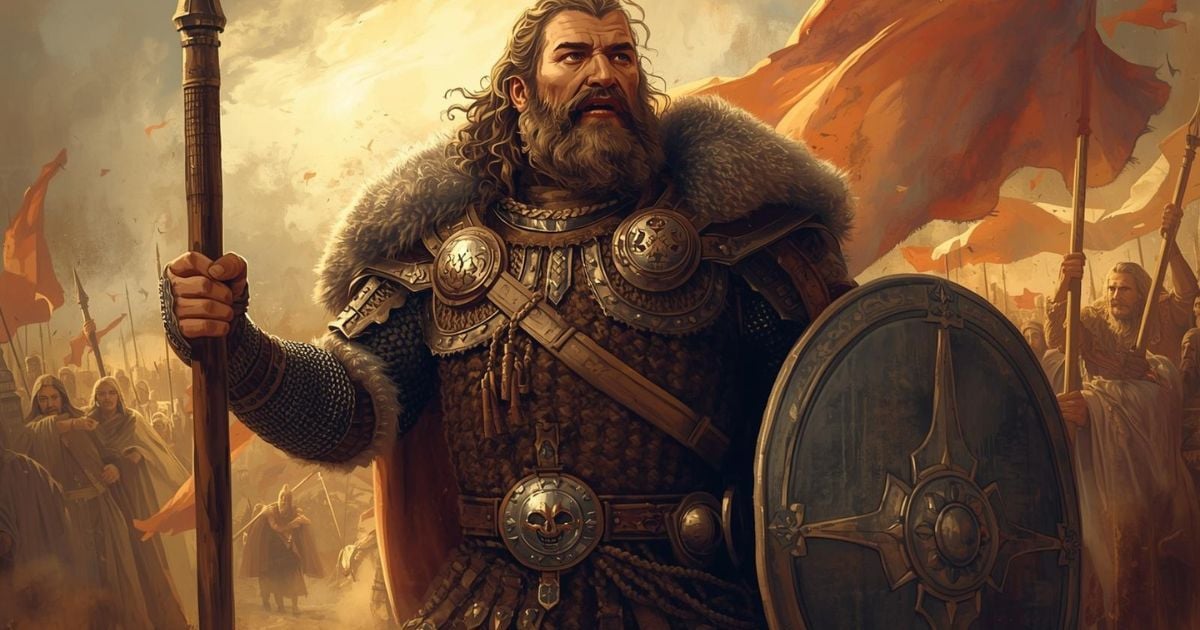
After Beowulf's victory over Grendel, King Hrothgar throws a magnificent celebration that's part victory party, part business transaction. The great hall Heorot gets a makeover, workers hang golden tapestries and decorations to cover up the damage from the monster fight.
It's like renovating after a break-in, but making it even better than before. Hrothgar doesn't just say 'thanks', he backs it up with serious gifts.
Beowulf receives a golden war-banner, a decorated helmet, chain mail, and a famous sword. But the real power move comes when Hrothgar gives him eight war horses, including one with the king's own jeweled saddle.
This isn't just generosity; it's smart politics. By giving Beowulf both weapons and horses, Hrothgar is essentially making him a military commander with real resources. The ceremony serves multiple purposes: it publicly honors Beowulf's courage, shows other warriors what loyalty gets rewarded with, and creates a debt of gratitude that binds Beowulf to Hrothgar's kingdom. Everyone watches this exchange, understanding the unspoken message, serve well, get rewarded well. The poet emphasizes that no one could criticize Hrothgar's generosity, highlighting how a leader's reputation depends on treating heroes right. This moment transforms Beowulf from a foreign mercenary into an honoured ally with real skin in the game.
Hrothgar's celebration reveals something uncomfortable about how power actually works: the people who lift you up often expect you to carry their weight. This wasn't unique to medieval warrior culture, it's the foundation of every workplace, every family, every community today. When your manager publicly praises you, when your family makes a big deal about your success, when your community celebrates your achievements, they're not just being nice. They're making an investment and expecting returns. The genius of this system is that it feels good to be chosen. Bjorn feels proud walking to that company truck, just like Beowulf felt honoured receiving those war horses. But both men are also trapped by gratitude. The more publicly someone honors you, the harder it becomes to disappoint them later. This creates a peculiar kind of prison, one built from golden bars of recognition and respect. The question isn't whether to accept recognition (we all need it), but how to accept it without losing your ability to say no. Understanding this pattern helps you navigate those moments when opportunity and obligation arrive wearing the same face. Sometimes the biggest favor someone does you is the one that costs you the most.
Explore this chapter with AI to uncover deeper meaning and practical takeaways.
AI Discussion