
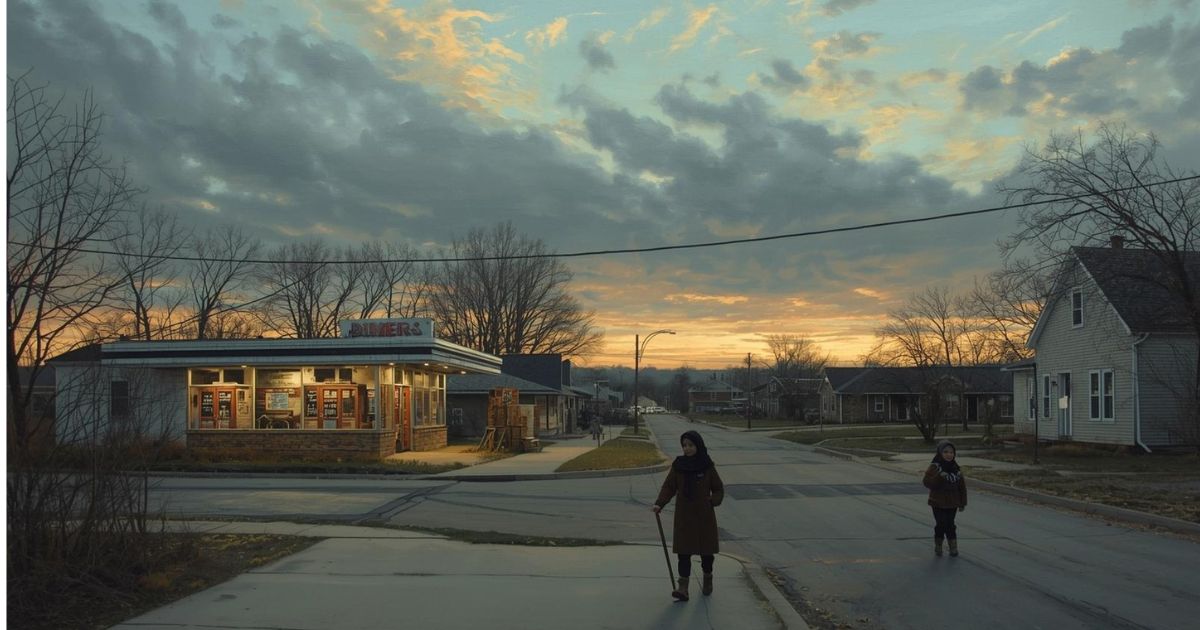
At the table, hot soup sits in a hotter room. The roses on the cloth are dying, and the smell of Brussels sprouts overwhelms them. Adams sits low in his chair, unable to flatten his starched shirt-front. Alice keeps up a bright stream of nonsense: yesterday angels were in charge of the weather, but today the devil has moved the equator on top of them. Gertrude leans against the wall chewing and ignores every signal to clear the soup until Alice asks her directly. When she takes only three cups and leaves her host's, Adams calls after her and asks his wife, too loudly, what the woman's name is.
Alice smooths over everything: her parents for Russell, and Russell for her parents, though he never knows it. Her eyes keep asking him whether he can bear it. He smiles kindly but with strain, wipes his forehead and hardly looks at her. Adams thinks him the finest, quietest young man Alice has ever brought home. At last, he thinks. Alice, meanwhile, asks herself why she did not stop her mother's menu, and what is the matter with him. Course after heavy course arrives between long waits, and she feels her heart grow as heavy as the food.
Over coffee Adams apologises for having no cigars. Russell says he smokes a pipe. Alice remembers what she told him the day he first overtook her outside the tobacconist's, and decides he has forgotten. Then the doorbell rings. Gertrude, told to say the family is not at home, comes back: a Mr. Law says he will wait. It is Charley Lohr. Adams takes him upstairs, and Mrs. Adams soon follows.
Alone with Russell, Alice lets her face fall for ten seconds, then springs back. She tosses a dead rose at him for his thoughts. He has none. She tries a lisping 'Tell auntie!', and he flinches. On the veranda, where they belong, he answers everything with 'Not at all' until she begs him to stop. She guesses someone has talked about her after all. He denies it. She reminds him he once said only she could drive him away, and asks whether she has. Looking back over the summer, she sees every memory touched by the false haze of her own pretending. It is finished, isn't it? He says he ought to go. She runs for his hat, laughing at their romantic parting about hats. Then from upstairs comes a long, wailing cry from her mother. Russell hesitates. Alice waves him on: they have lots of that in this funny little house. She closes the door heavily behind her.
Alice's dinner party disaster reveals a cruel psychological trap that hasn't changed in a century. When we sense rejection - romantic, professional, or social - our instinct is to try harder. But desperation has a smell. The more frantically Alice performs, the more uncomfortable everyone becomes. Russell can sense her panic, which makes him want to escape, which makes Alice perform even more desperately. It's a feedback loop that guarantees failure. This pattern shows up everywhere in working-class life. The employee who senses their temp position ending and suddenly volunteers for everything, staying late conspicuously, over-explaining every decision. The single parent whose teenager is pulling away who responds with more rules, more questions, more forced family time. The friend who texts increasingly frequently when someone stops responding quickly. The mechanism is always the same: fear of loss triggers performance, performance reveals desperation, desperation creates the very rejection we're trying to prevent. Tarkington understood that class anxiety makes this trap even more vicious. Alice isn't just afraid of losing Russell - she's afraid of being exposed as not belonging in his world. Her desperation isn't just personal; it's about her entire constructed identity crumbling. The most powerful response to sensing rejection is often the hardest: step back, give space, let the other person come to you or not. When you can name this pattern in your own life, you can navigate it instead of being trapped by it.
Explore this chapter with AI to uncover deeper meaning and practical takeaways.
AI Discussion