
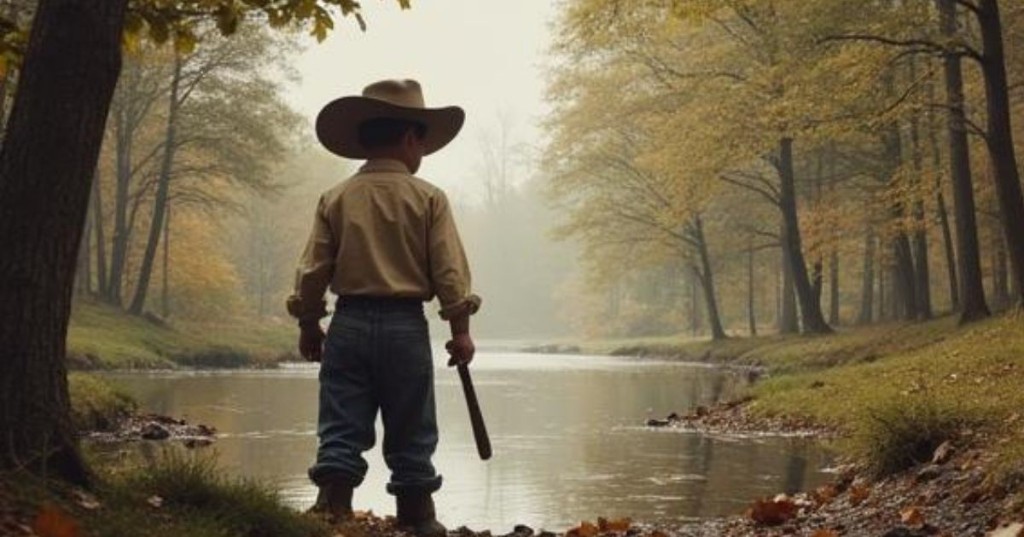
Becky Thatcher returns to town, and Tom forgets treasure for a while. They play games, plan a picnic, and Tom talks Becky into visiting the Widow Douglas for ice cream instead of going straight home after the party. He is happy just to be near her again.
Saturday the ferry carries a happy crowd to a picnic three miles downriver. Tom keeps hoping to hear Huck's meow signal, but the treasure must wait. After food and games, everyone explores McDougal's Cave with candles.
They run through twisting passages until night falls and the bell calls them back to the boat. Tom knows the cave better than most boys, but even he does not know the whole endless maze. Becky is thrilled by the dark tunnels and the echoing halls.
While Tom plays, Huck watches the tavern alone. He sees Injun Joe and his partner carry a box up Cardiff Hill toward the Widow Douglas's house. The box looks heavy, like it might hold the stolen gold.
Joe wants revenge on her dead husband, who once had him horsewhipped in public. Huck runs to warn the Welshman, even though he could be killed for telling what he heard. He has no time to find Tom first.
Huck Finn faces a terrifying choice: warn the widow about Injun Joe's revenge plot, knowing it could get him killed, or stay silent and safe while an innocent woman suffers. What's remarkable isn't that Huck chooses courage—it's that Twain shows us exactly why he does. The widow never lectured Huck about morality or demanded his gratitude. She simply fed him when he was hungry and treated him like he mattered when nobody else did. That small kindness created a debt stronger than his fear of death. This pattern repeats constantly in working-class communities where people risk their jobs to report safety violations, their housing to call police on domestic violence, or their relationships to tell hard truths. The calculation isn't rational—it's emotional. We protect people who protected us first, even when it costs everything. But here's what Twain understood that modern self-help misses: real courage isn't about conquering fear. It's about having something worth being afraid for. Huck's terror is what makes his choice meaningful. When we dismiss our own fear as weakness, we miss the point. The fear proves the stakes are real. The question isn't whether you're scared—it's whether your loyalty runs deeper than your fear.
Explore this chapter with AI to uncover deeper meaning and practical takeaways.
AI Discussion