
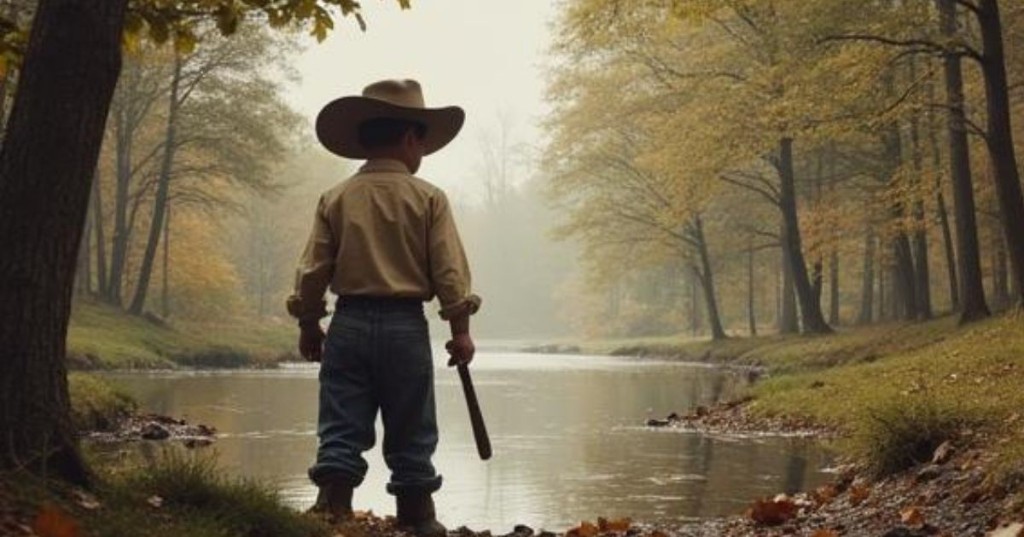
Tom and Huck head to the haunted house with their tools, but Huck remembers it is Friday and bad luck. Tom agrees they should wait. They play Robin Hood all afternoon instead and feel lucky they did not go inside on the unlucky day.
On Saturday they enter the creepy old house and hide upstairs. The place is silent and rotten, with cobwebs, broken stairs, and dusty windows. Two men arrive below, and the deaf Spaniard suddenly speaks. The boys gasp because it is Injun Joe.
Joe and his partner dig up buried silver, then find a chest of gold coins worth thousands of dollars. Tom and Huck watch through the floor, thrilled and terrified, barely daring to breathe.
Joe spots fresh dirt on their pick and shovel and almost climbs the stairs to search. The rotten steps collapse under him, and the boys escape with their lives. They shake with fear long after they reach the woods.
The men decide to move the treasure to a hideout called Number Two under the cross. Tom and Huck slip away quietly, sorry they left the tools behind. They fear Joe's revenge talk might mean Tom, since Tom testified at the trial.
Mark Twain understood something modern psychology has confirmed: our brains are constantly scanning for threats, often picking up on danger before our conscious minds can name it. In 1876, people called these feelings 'superstition' or 'intuition.' Today, we know the subconscious processes thousands of micro-details our rational mind misses—a person's body language, environmental changes, patterns that don't quite fit. The boys' fear of Friday the 13th was the delivery method, but their survival instinct was the real driver. This pattern shows up everywhere in working-class life. The factory worker who gets a 'feeling' about a machine and shuts it down before it fails. The nurse who can't explain why she checks on a patient one more time. The parent who doesn't let their kid go somewhere, even though they can't say why. These aren't coincidences—they're your internal warning system working. The challenge is learning when to trust these feelings versus when they're just anxiety. The key is in the pattern: survival instincts usually feel calm but urgent, while anxiety feels chaotic and overwhelming. Your gut often knows before your head catches up.
Explore this chapter with AI to uncover deeper meaning and practical takeaways.
AI Discussion